1 week scuba diving in the northern Red Sea from Hurghada
I am a certified divemaster, and have been diving in 8 countries including Honduras, the US, Portugal, Vietnam, Indonesia, Australia, the British Virgin Islands, and Egypt. I get asked a lot where the best place to scuba dive in the world is.
It’s Egypt.
In this guide, I’ll go over a detailed description of my experience diving for 1 week on a live aboard in the Red Sea Egypt, including how to get there, what to expect, how to select a dive operator, where to stay before and after, and best dive sites.
Note: If you don’t have international data, I highly recommend downloading an e-sim before your trip! While many of the huts have wifi, it’s good to have service in case of emergencies or to ensure your map loads. I use Airalo for my e-sims, which is affordable and is easy to download. Make sure your phone is e-sim compatible!
Introduction: Is Hurghada Right for Your Dive Trip?
This guide is for the adventurous scuba diver with at least 30 dives under their belt, advanced dive certification, and a love for nature!
The Red Sea is, in my opinion, the best diving in the world. Combined with the unique culture of Egypt, this type of experience is unmatched throughout the world, and I have been on 40+ dives in Indonesia alone with Indonesia winning a close second.
Part of the allure of the Red Sea is it’s hard to get to. Typically you will see local or European divers, and not many people from the Americas. If you’re okay traveling further, the diving is absolutely worth the trip.
Below I cover the options you have diving, with extensive details about live aboards (my recommended way to visit the Red Sea, as it is a massive area), and resort or day boats from Hurghada.
What to Expect Diving in the northern red sea
Visibility
It’s amazing, what can I say? 100+ feet with incredible coral colors. I did have one day that was especially windy where the visibility was more like 10 feet, and it was during a wreck dive. Luckily we used the line to descend and ascend, so no issues there.
Current
The current can be pretty crazy in the Red Sea. Unlike Indonesia, you typically don’t have to worry about downdraft currents (thank goodness!) but most of the dives we did were drift dives, meaning you enter the water from one point and exit at another. Make sure you always have an SMB and reel on you just in case you get separated from the group. We entered the water via a back roll from a zodiac and the zodiac picked us up at the end of the dive.
Water temperature
Water temperature can range from 22C (during the winter) and 30+C (summer). In June, we had temps of ~25-26C, which was a little chilly. I wore a 5mm wet suit and during days we had 3-4 dives, I would wear another 0.5mm layer. I was grateful for the warm outside temperatures (32C).
Marine life
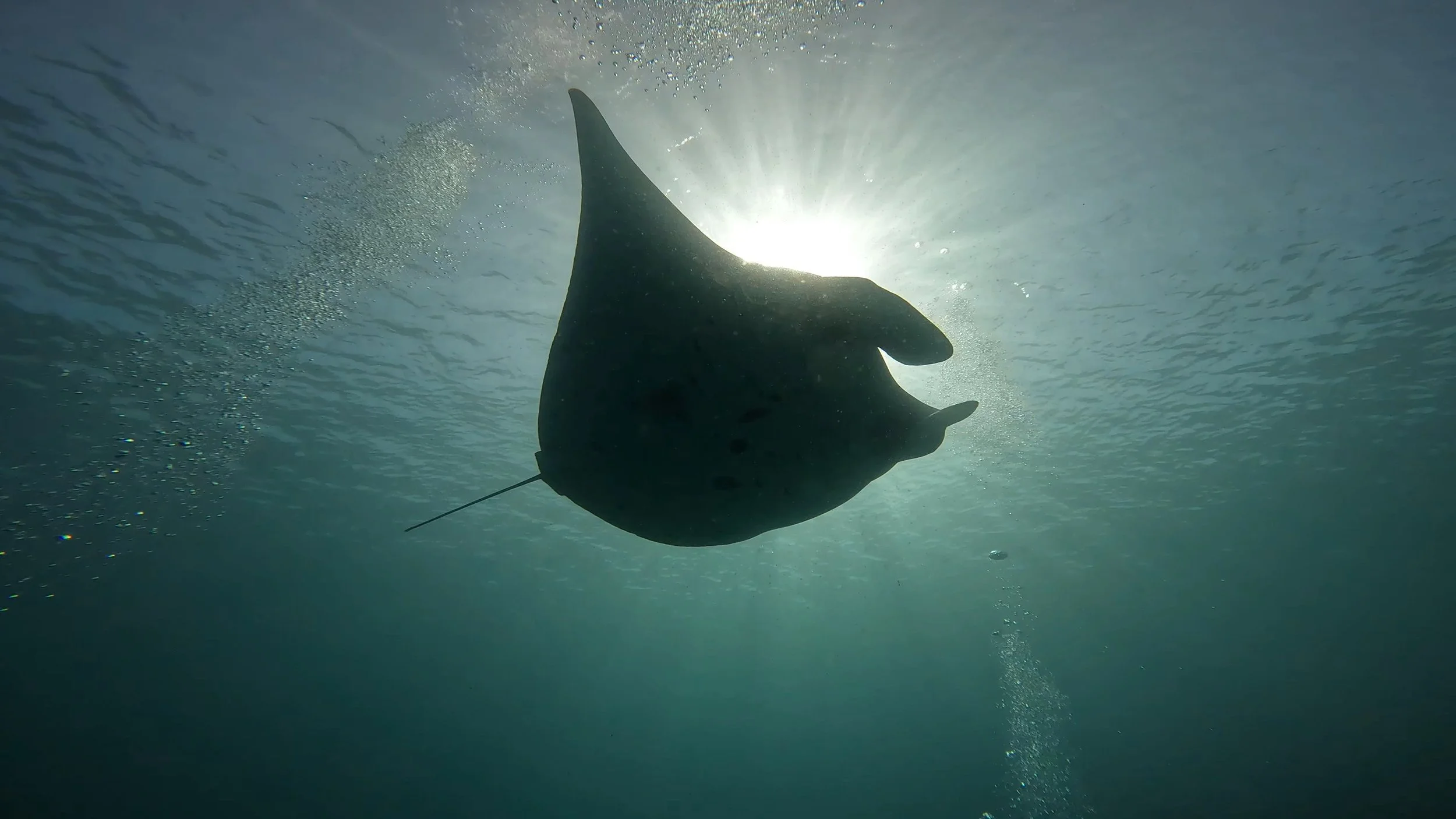
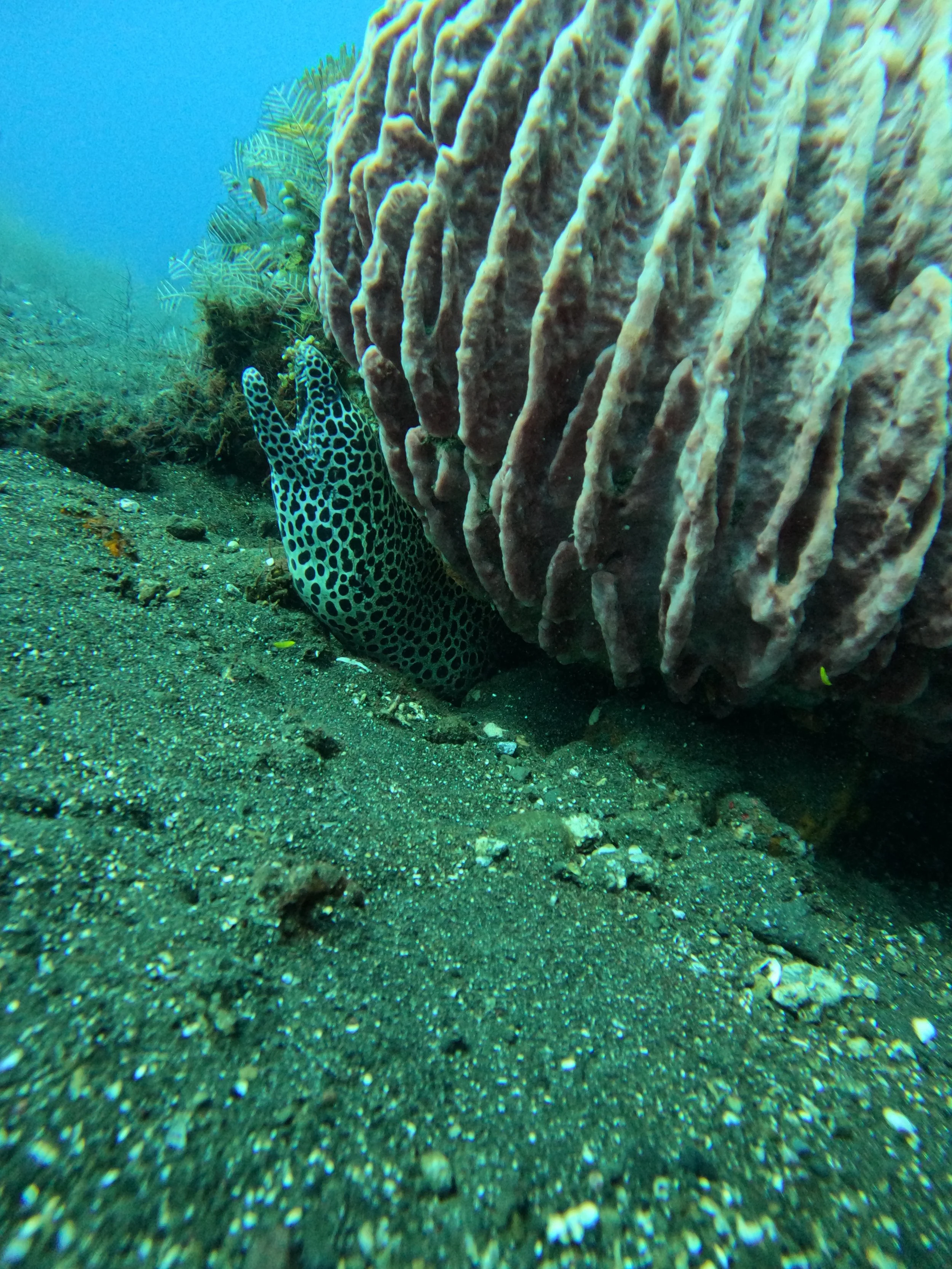
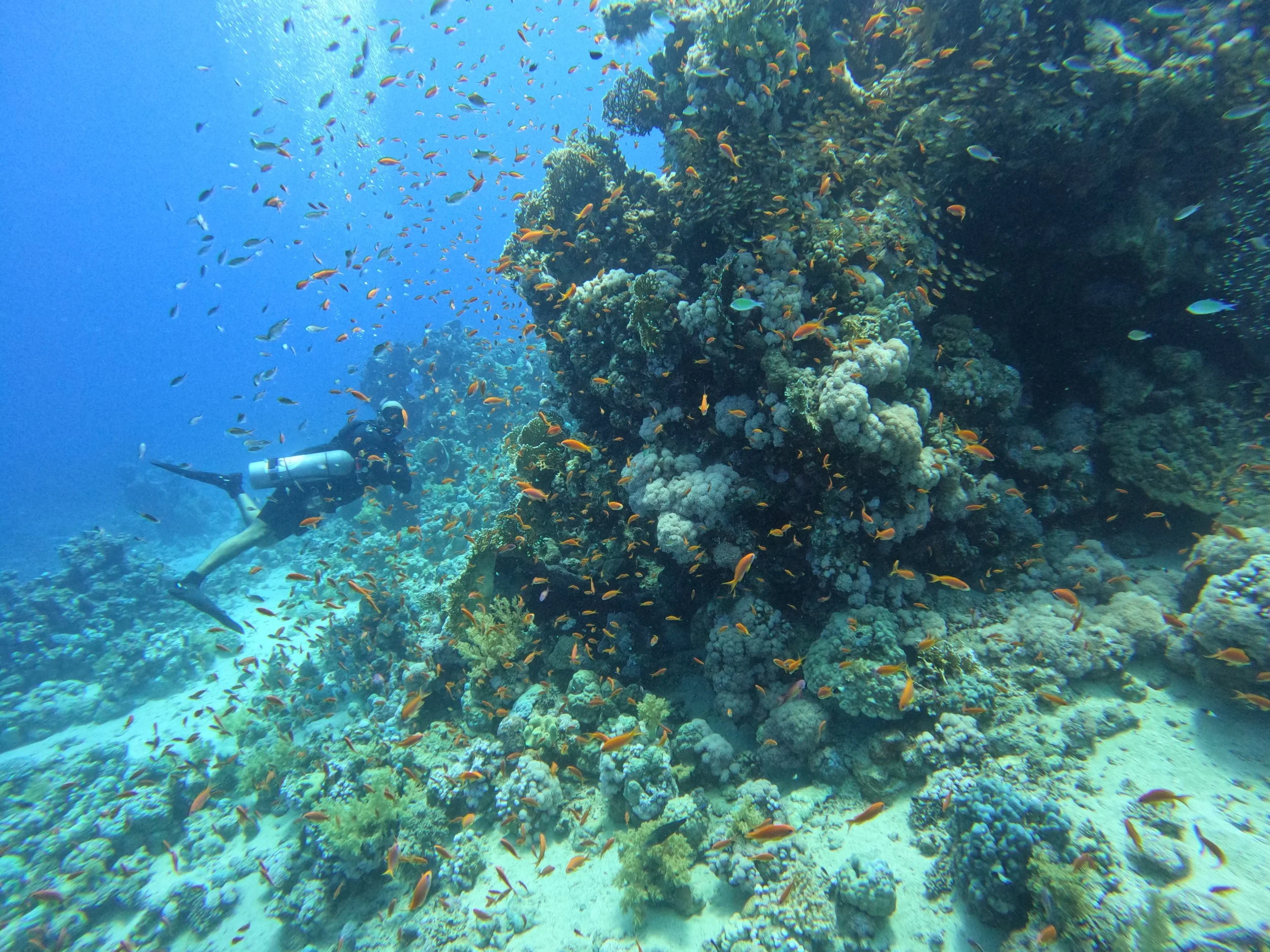
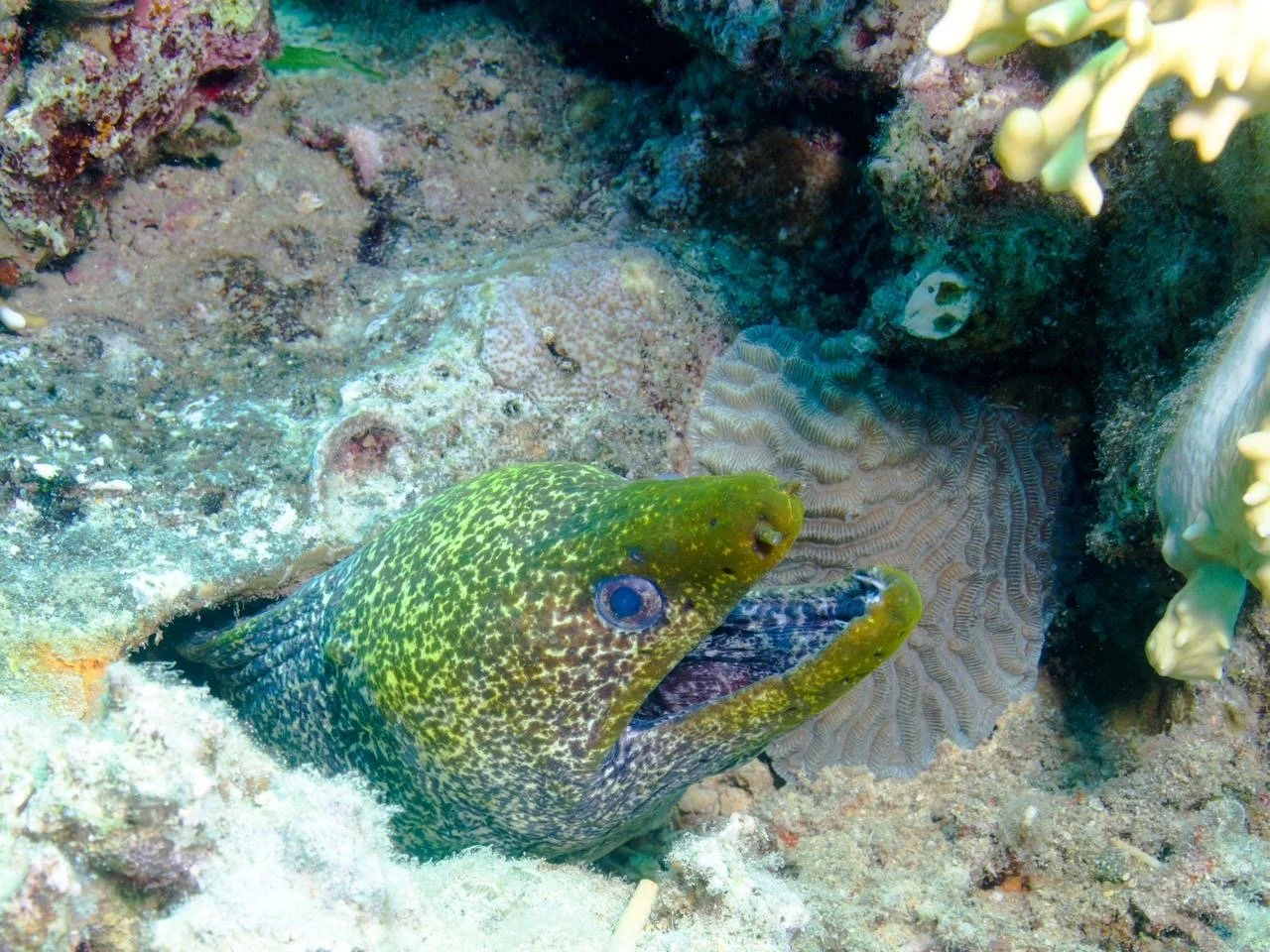
As I mentioned at the top of this post… I think the Red Sea is the best place to dive in the world. The coral is so full of life, with the largest fan corals I have seen (over 30 feet in diameter). I saw stone fish, eels, spotted sting rays, oceanic manta ray, dolphins, spanish dancer, octopus, clam digger (so weird, look it up), torpedo ray, scorpion fish, so many nudibranch… but unfortunately no sharks!
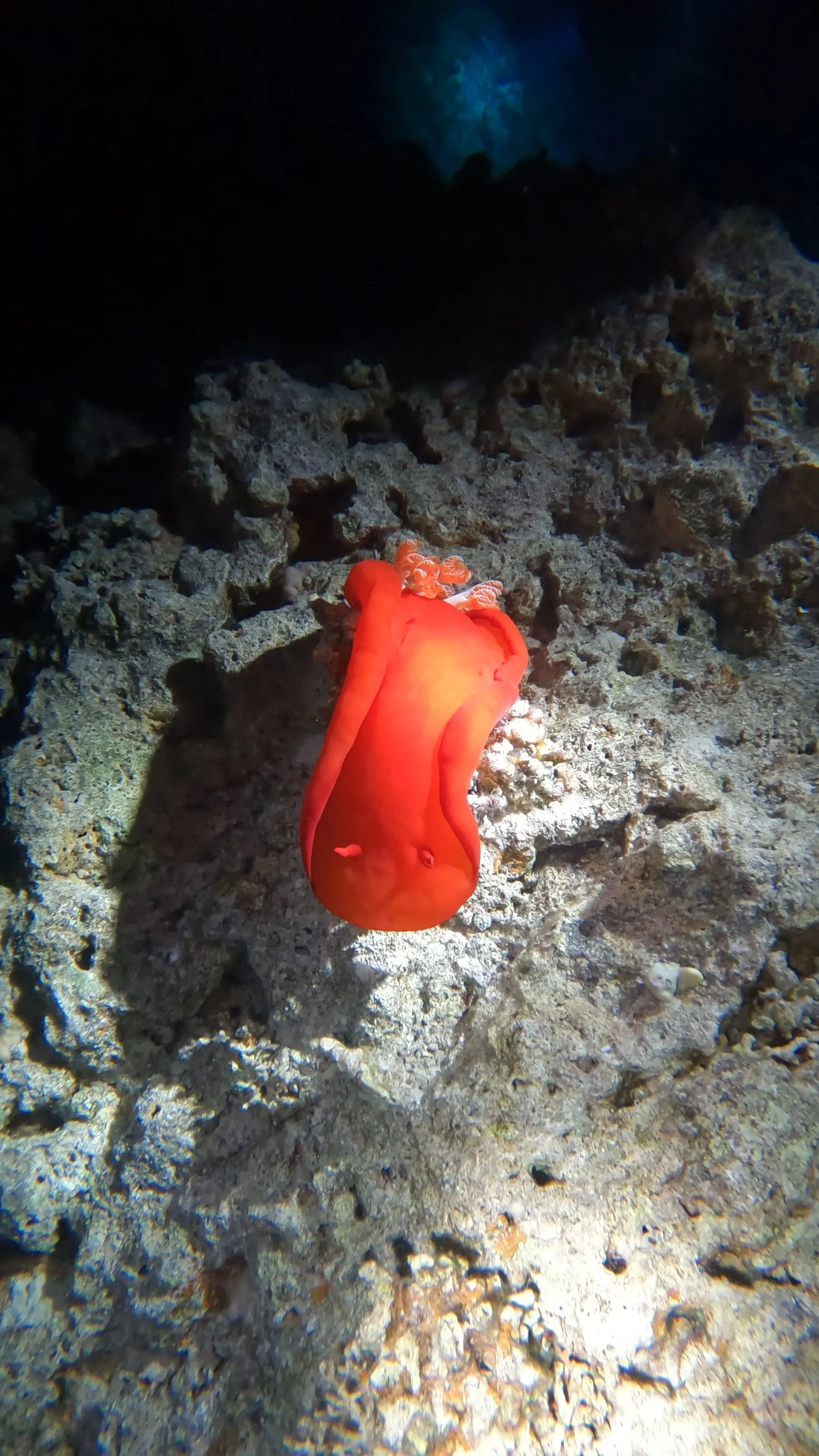
Egyptian Spanish Dancer
Reefs and wrecks
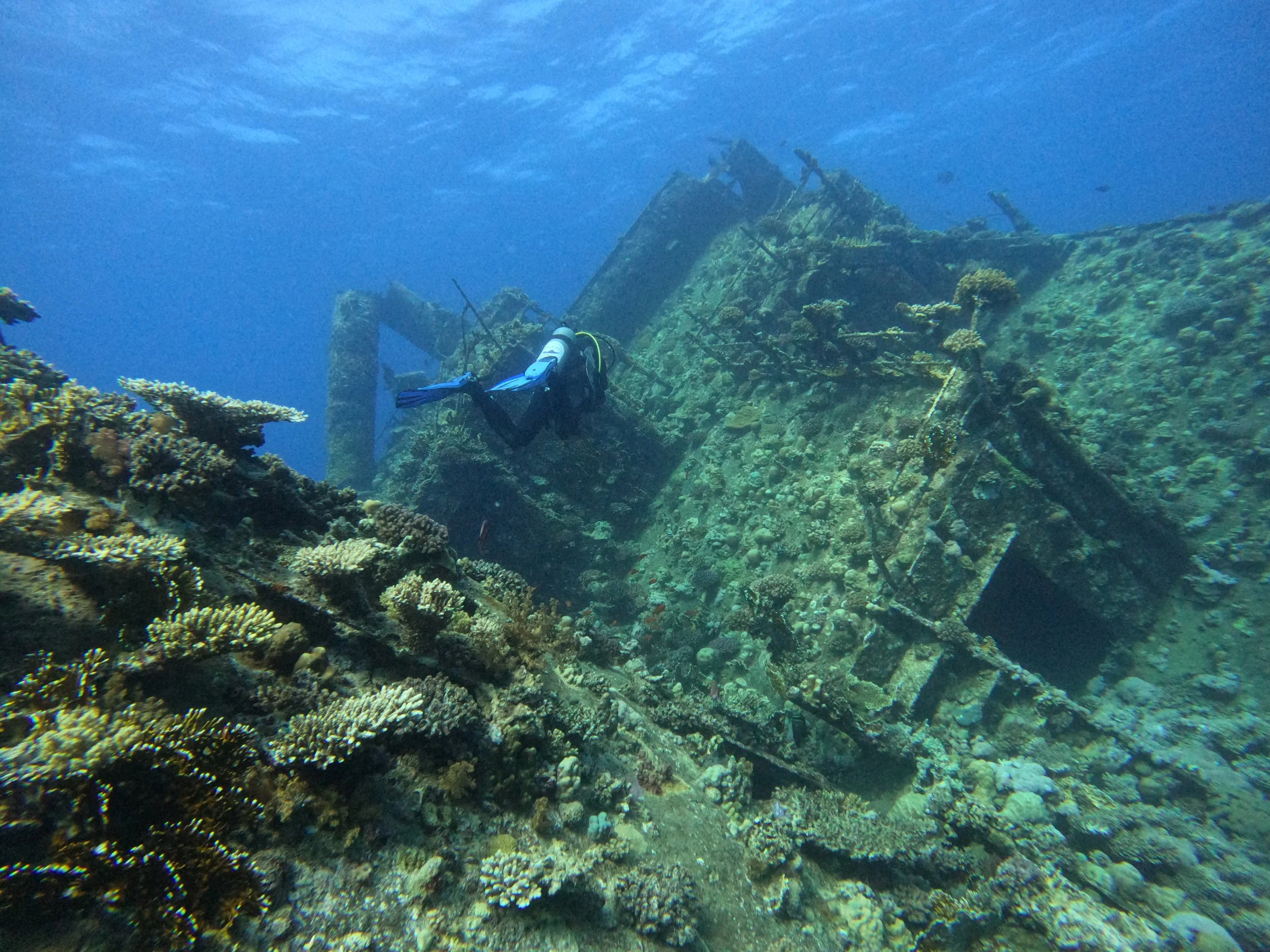
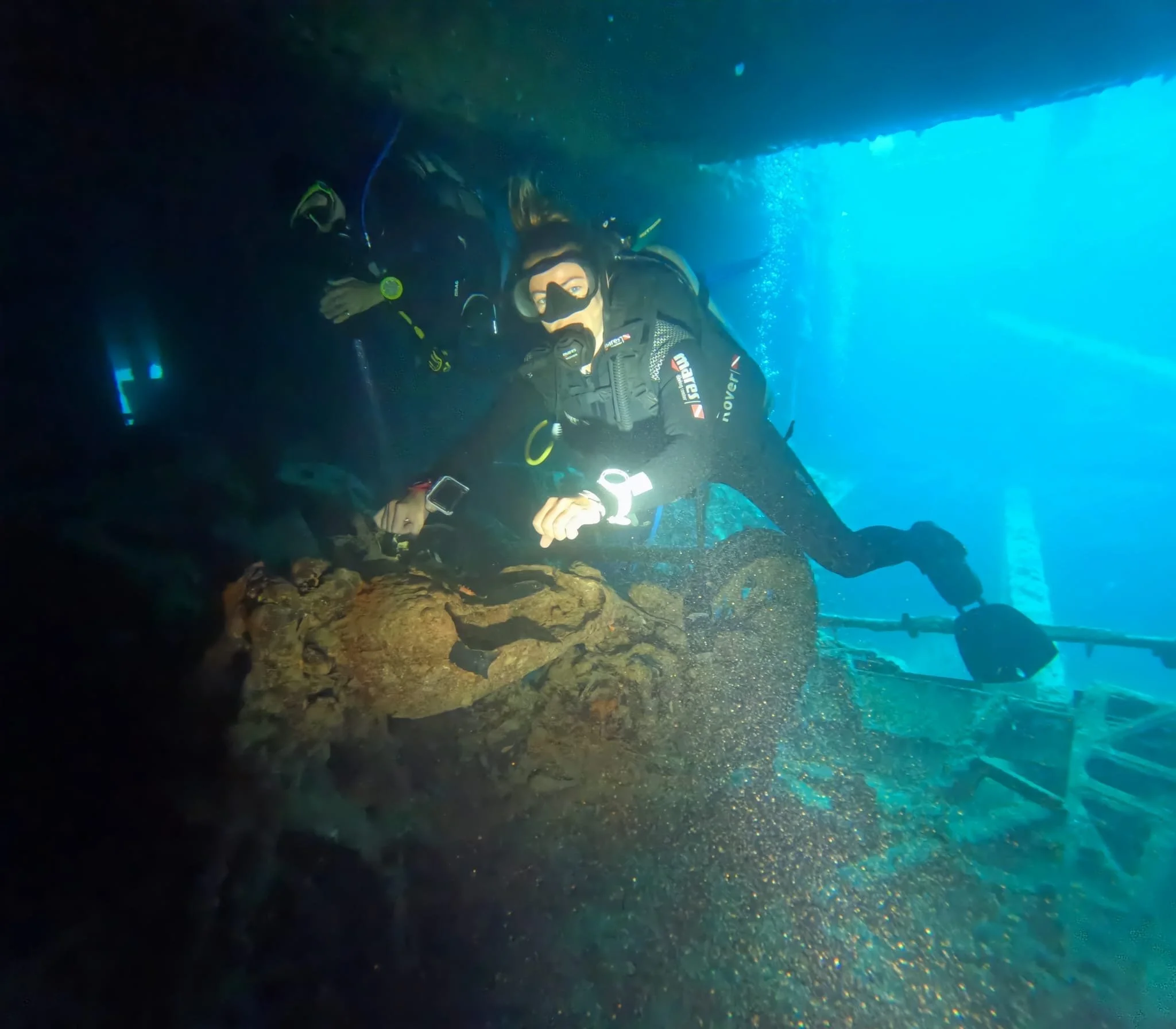
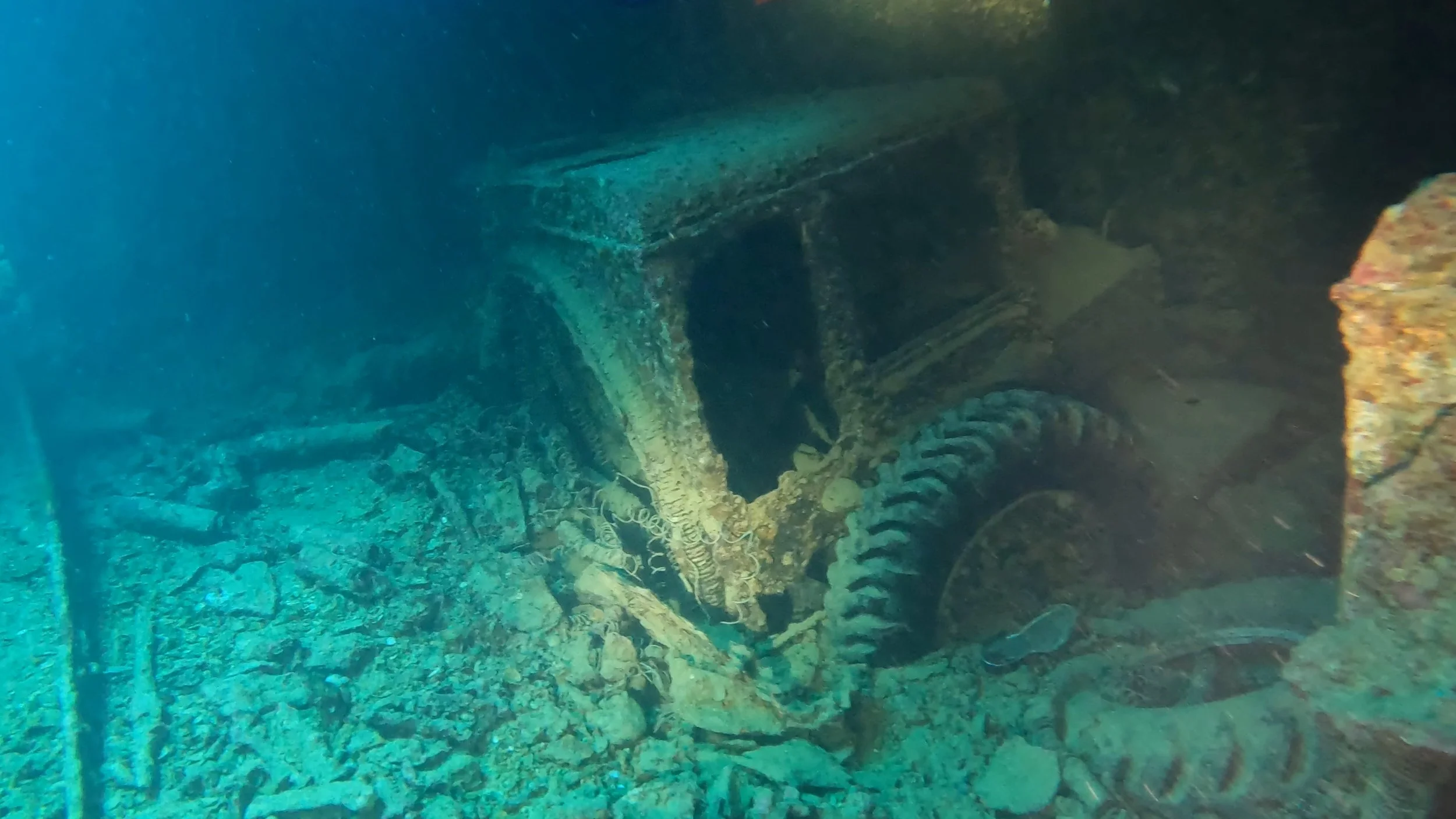
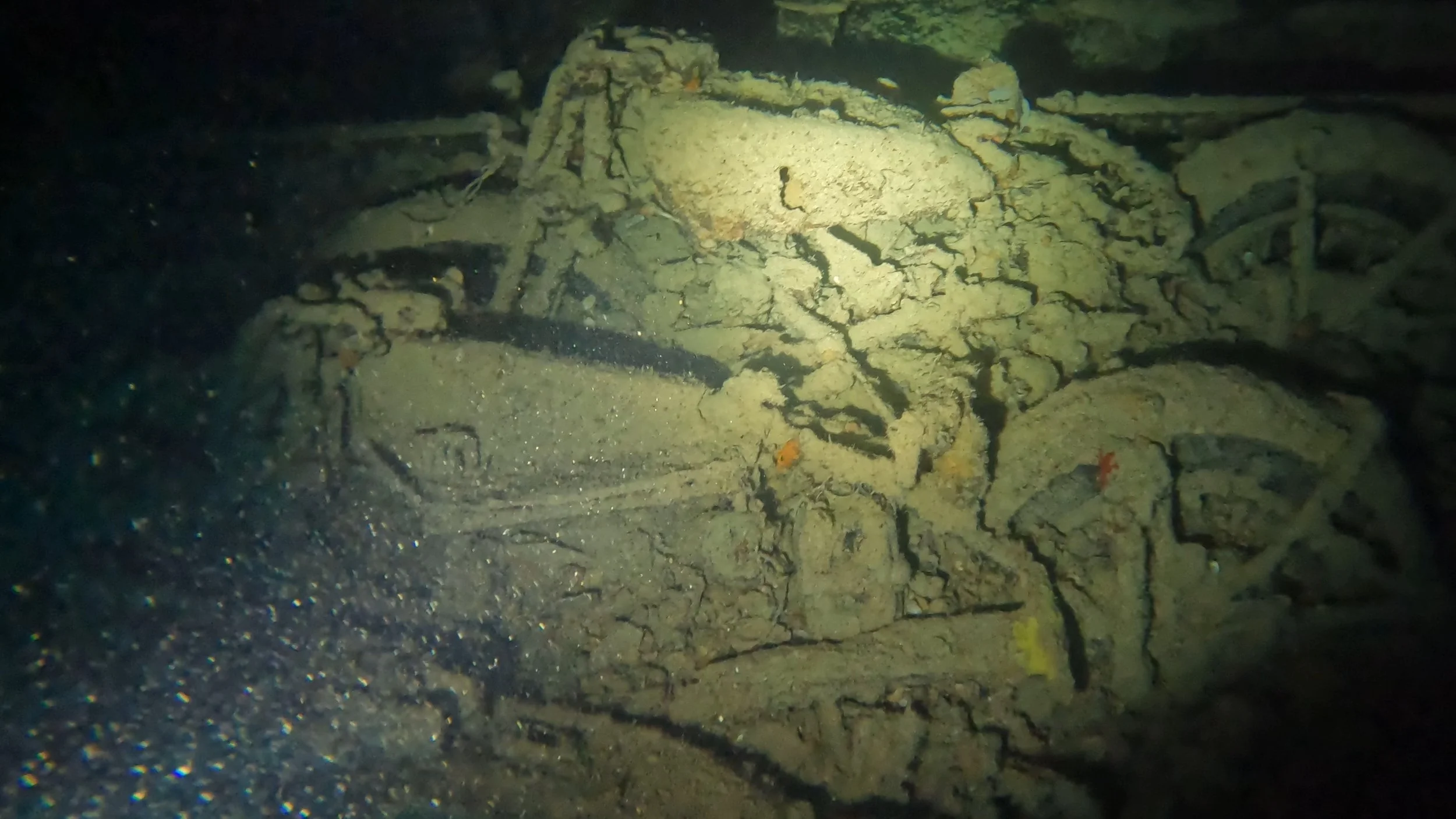
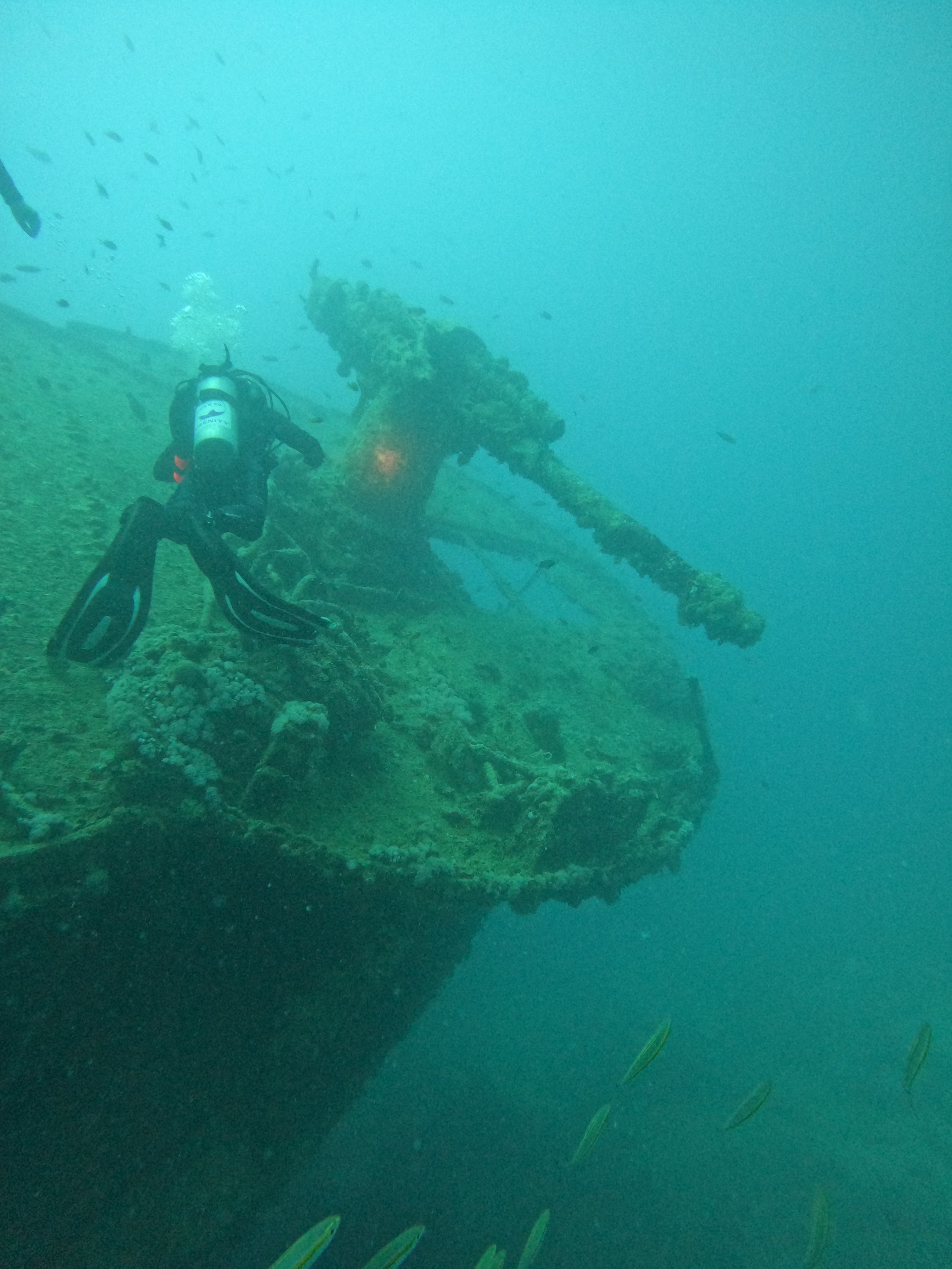
The Red Sea is home to more wrecks than you can count. On the Northern route, the most famous wreck is Thistlegorm, a British ship sunk in 1941 near Ras Muhammad National Park. It’s famous because it’s a living museum, with artifacts like motorcycles, guns / ammunition, bedford trucks (like the model T Ford cars). It was really awesome, but it was also one of the most crowded dive sites on my trip.
The two best reef sites were Brothers island (another popular location and only visitable by liveaboard) and Ras Muhammad National Park (where I saw the massive fan corals). Overall, the Red Sea has an incredible mixture of wrecks and reefs, both swarming with life.
Best Time to Dive in Hurghada
The Red Sea is a year round diving location. There’s something to see during every season, so it just depends on what you’re looking for:
Winter (December to February)
Great visibility but colder water (~72F). Great chance to see sharks including Oceanic Whitetip and Hammerheads
Spring (March to May)
Considered a popular time due to warmer water and not too scorching hot temperatures outside. Typically calm seas, with a chance to see whale sharks. Expect crowds.
Summer (June to August)
Obviously very hot outside and in the water. Based on my experience in June, it really wasn’t too hot and if you’re in the water a lot, you’ll still be slightly chilled. Less crowded (huge plus!) on live aboards and at resorts
Fall (September to November)
Probably the peak time to visit, as temperatures outside go down while water temperatures stay warm. Chance to see manta rays.
How to Get to Hurghada
The best way to get to Hurghada is by plane.
Hurghada is an international airport, with direct flights through out Europe on budget airlines like EasyJet and Wizz Air (i.e. London, Rome, Bordeaux, Berlin, Istanbul, etc…). I flew in on an EasyJet flight from London. Just remember to either pay extra for a bag or pack lightly, because these budget airlines will check your bags!
The other option is to fly internationally to Cairo and then take a hopper to Hurghada.
I do not recommend buses - the traffic is pretty horrible and the weather hot.
From the airport, you should organize with your liveaboard directly to get picked up and transferred to the boat. Alternatively, there is Uber (I took an Uber for $4 and it was very safe). The airport does not have wifi, so make sure you get a data plan (even if it’s just 1GB) so you can navigate to the town.
You will need a visa! Upon arrival, you can purchase one at a kiosk saying “Visa on Arrival”. This process was stressful for me, because there were lots of people yelling and trying to get you to go purchase a potentially not correct visa from them. Make sure you follow the signs and the cost should be $25 USD (paid in cash, USD or Euros). You will receive a sticker in your passport and a receipt, which you must show upon going through customs. Do not buy this ahead of time online - again, it’s a scam!
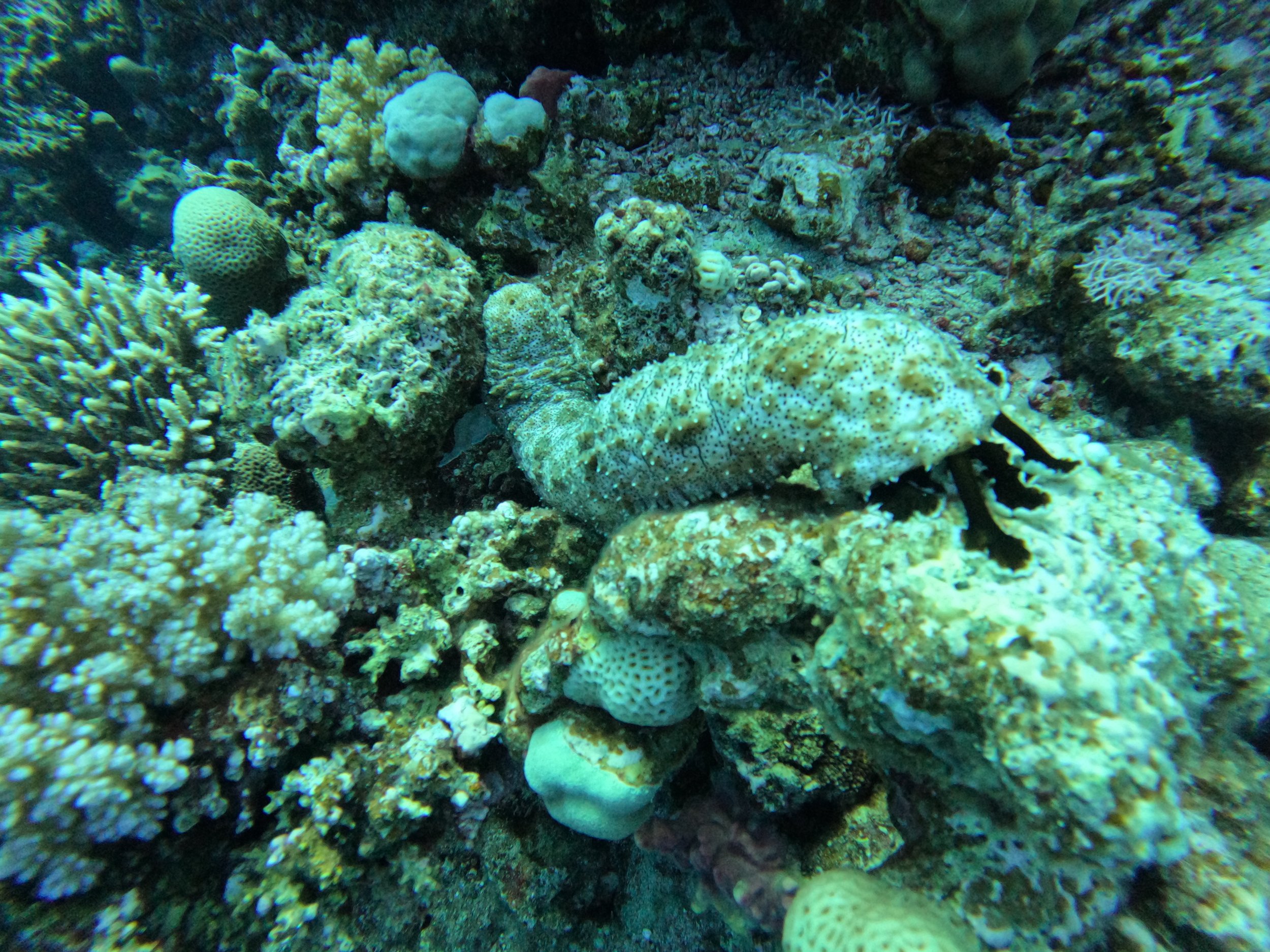
A strange sea slug
How to Choose a Dive Operator or Liveaboard
I used liveaboard.com for my liveaboard search. I found it to be the most reliable way to equally compare boats and routes in the Red Sea.
The most important thing to look for is safety. Read through each of the posts and ensure that safety is top of mind. Read through the comments as well - I always threw out any of the ones that had any comment or concern about safety.
Some other considerations:
Route
There are boats that go all over the Red Sea, but in general, there are northern, central, and southern routes that leave from Hurghada. Additionally, there are routes that leave from Hurghada and end in Port Ghalib or Marsa Alam. Think about what you want to see (wrecks, specific animals) and how you’re going to travel after the dive trip.
Group Sizes
Of course, smaller the better is always the right thought process when diving on a liveaboard. Not only is the boat less crowded, but your dive sites will feel more secluded and you’ll have less people in a group with the dive master.
Required certification level
Typically you will see criteria at the top of the liveaboard stating “open water certification”, “advanced level certification”, “30 minimum dives”, “70 minimum dives”, etc. The more advanced you get on your criteria, likely you will filter out anyone who may be uncomfortable or inexperienced in Egypt diving conditions. I personally try to find a dive trip with the most required dives (as I have ~200 dives) because I know that the people will have a lot of experience and good air consumption.
Total number of dives
If you’re like me, I like to look at the total cost and how many dives I get out of the trip and get the best “cost per dive” comparison among all the liveaboard options. This only makes a difference if you are going to do all the dives (which of course is not required).
Cost
If cost is a consideration for you, make sure that you include all the extras. Typically the listed cost is not the actual cost - you will have additions like port fees, equipment rentals, nitrox, sometimes wifi, required gratuities, etc… so make sure you know exactly what you are signing up for. Just because one boat has a cheaper listed price does not mean it’s the best option for you!
Boat amenities
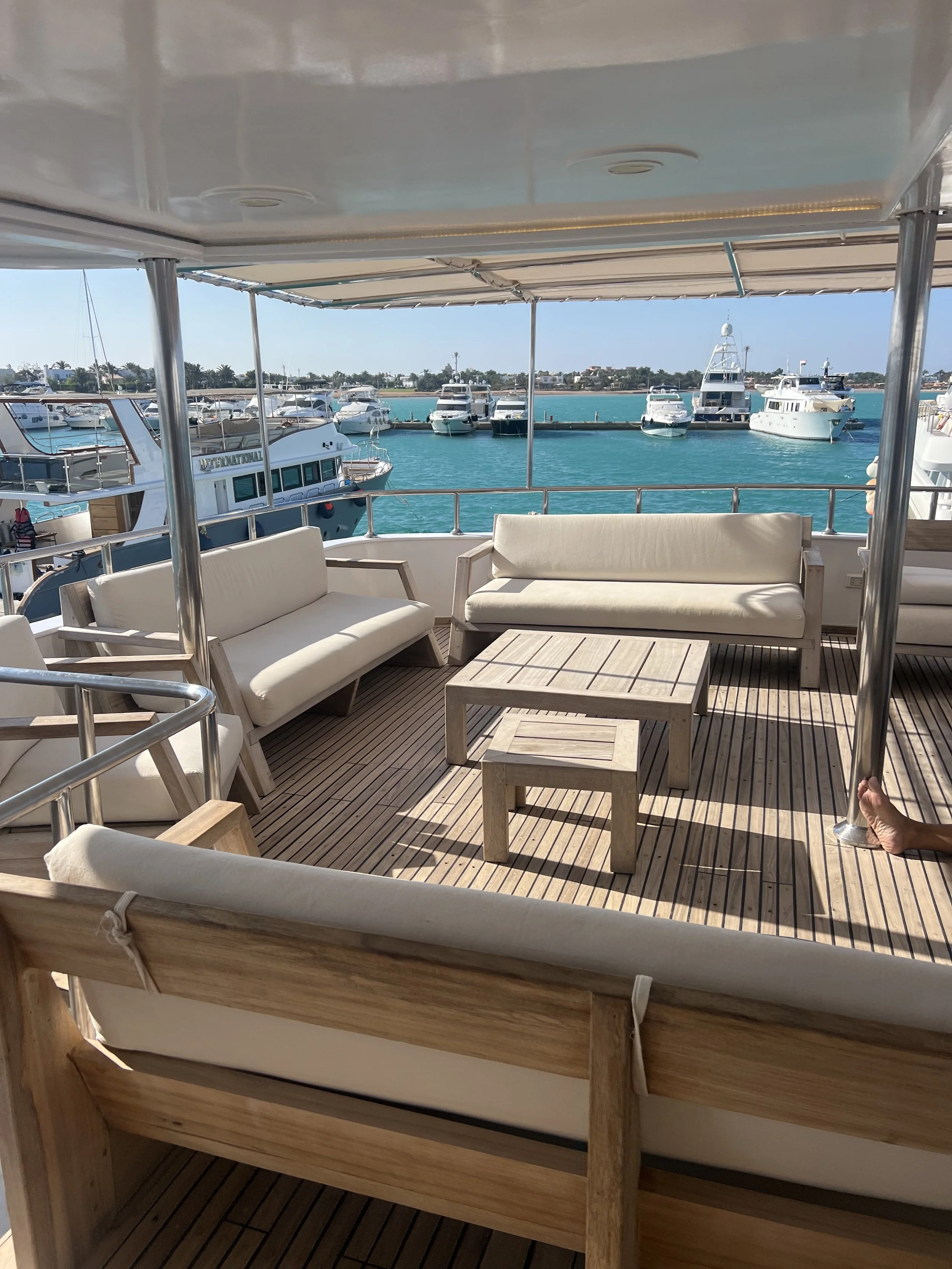
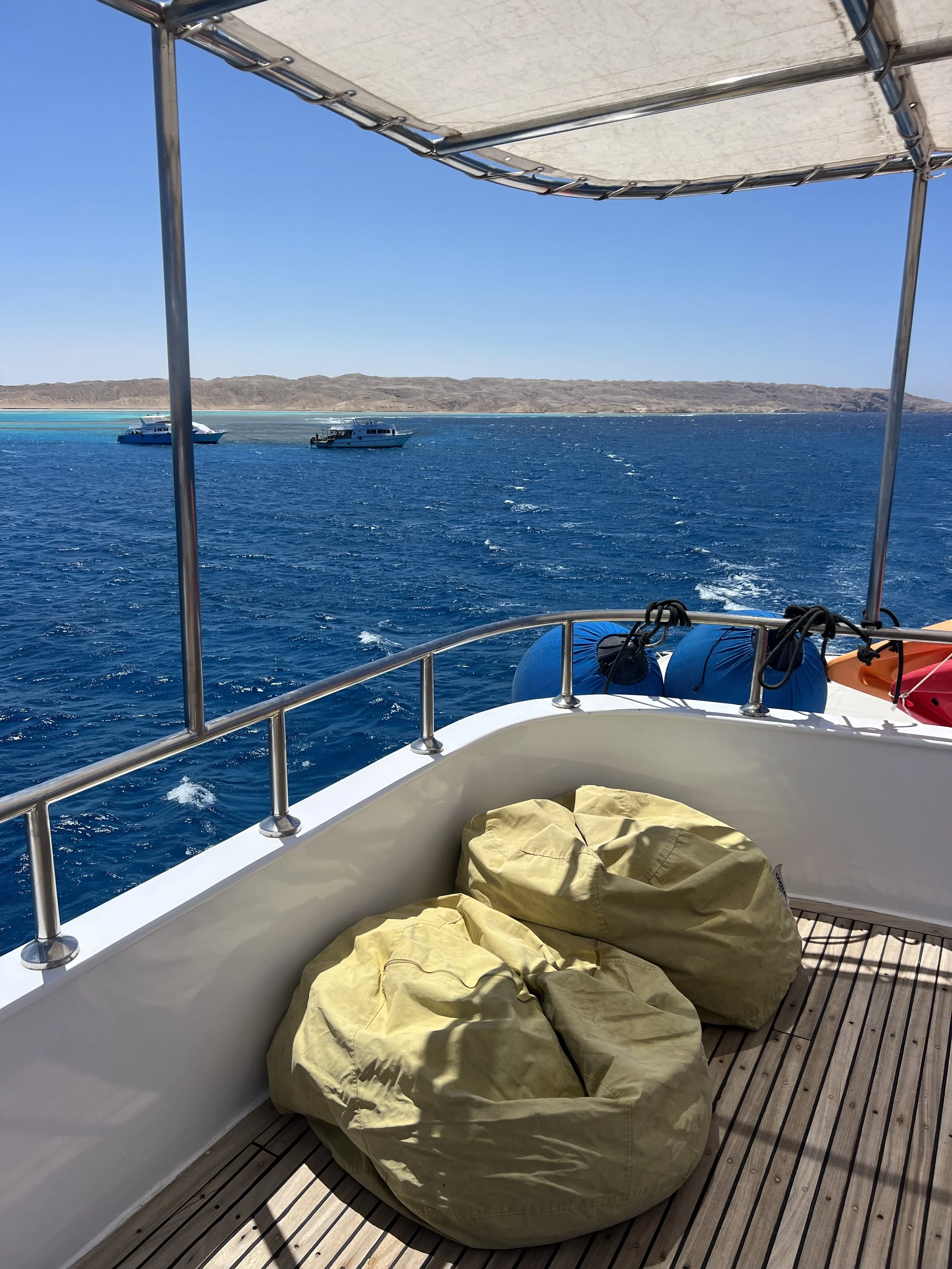
Some nice to have things while you’re living on a boat for 7 days with a group of people are… en-suite bathroom, private room (or limit of 2 people in a room), a hangout area, snacks and drinks included, etc…
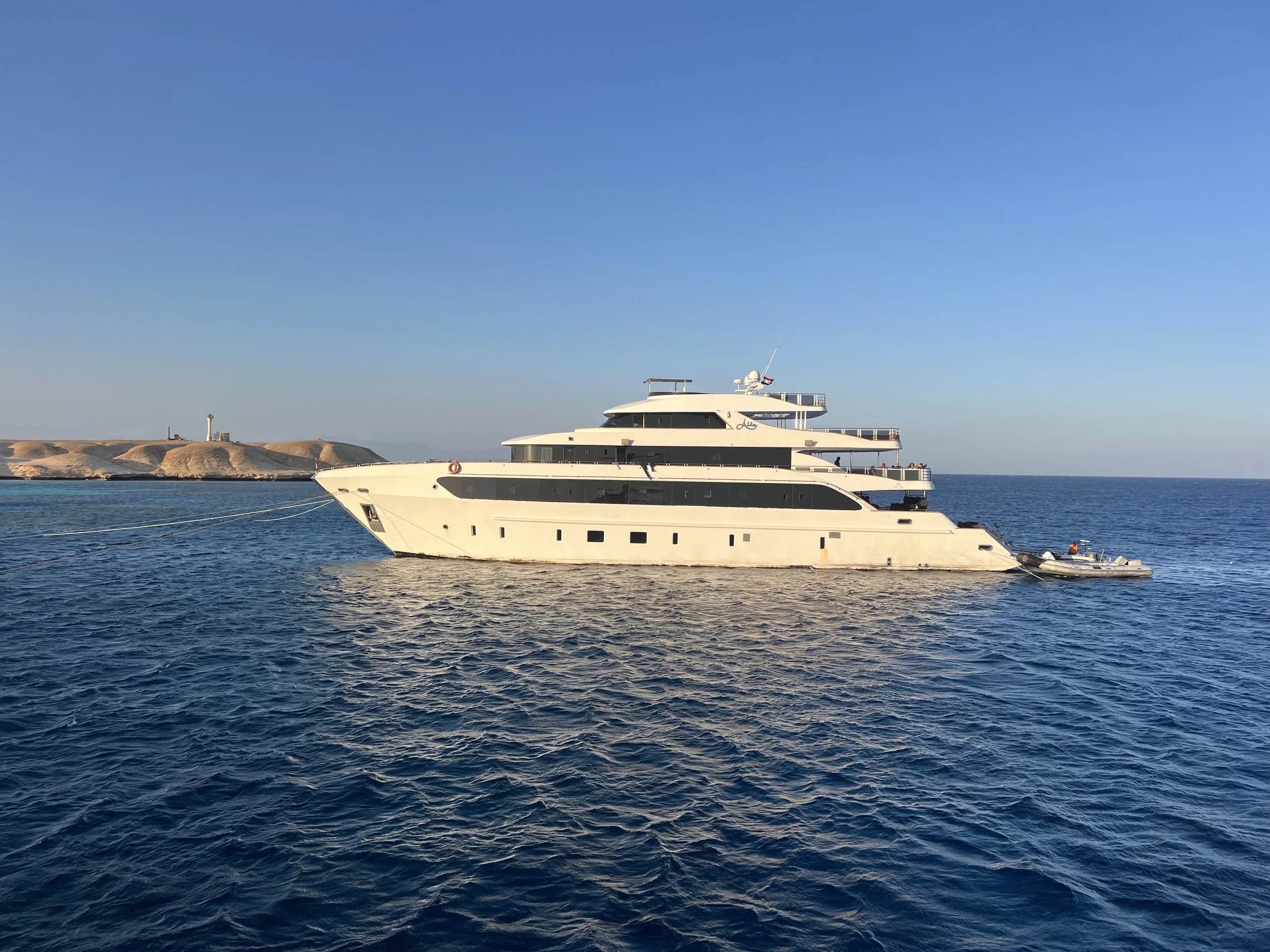
I ended up booking the Serenity with Divers & Co, and I could not recommend them more. They were extremely professional, safety was top of mind, and when I go back to Egypt, I will absolutely book them again. There were 2 people on my boat that had booked with this company the past 15 years, that’s how good it was!
Liveaboard vs Resort-Based Diving
The great thing about the Red Sea is there is an abundance of diving close to shore and deep into the Red Sea! Below I compare the pros and cons of each option.
Costs: Liveaboard ($1000-$2000) vs resort ($500-$1300)
Sleeping: Obviously, on a liveaboard you’re sleeping on a boat, and typically the boat moves during the evening. Therefore, if you get sea sick, you likely won’t have a great time!
Dive sites: Liveaboard provides you with more variety of dive sites, as you get to go out to locations (including Brothers Island) which are not accessible on day trips. Plus, the dive sites are likely less crowded because they are harder to access
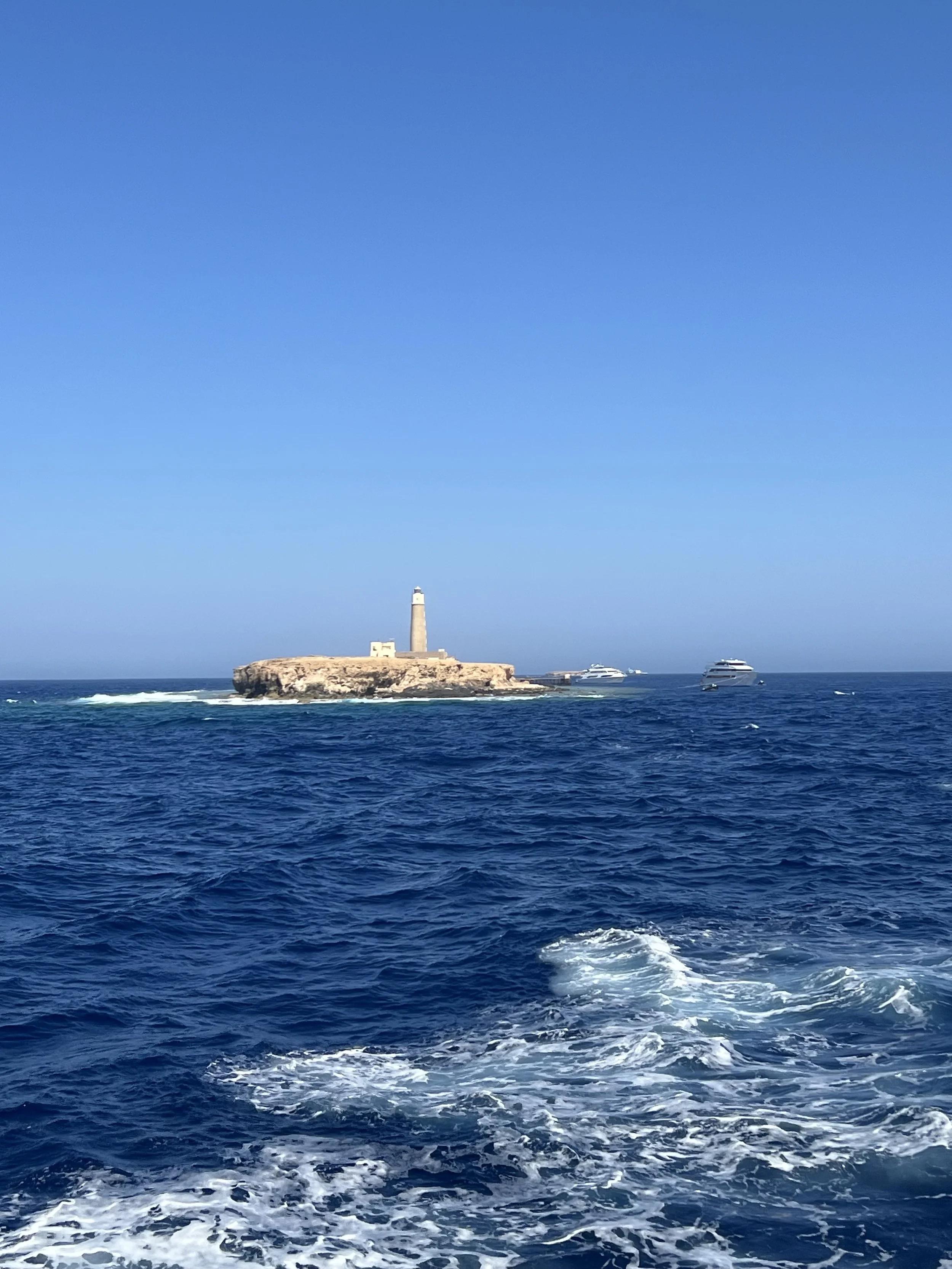
Only 2 boats at this dive site - and only live aboards!
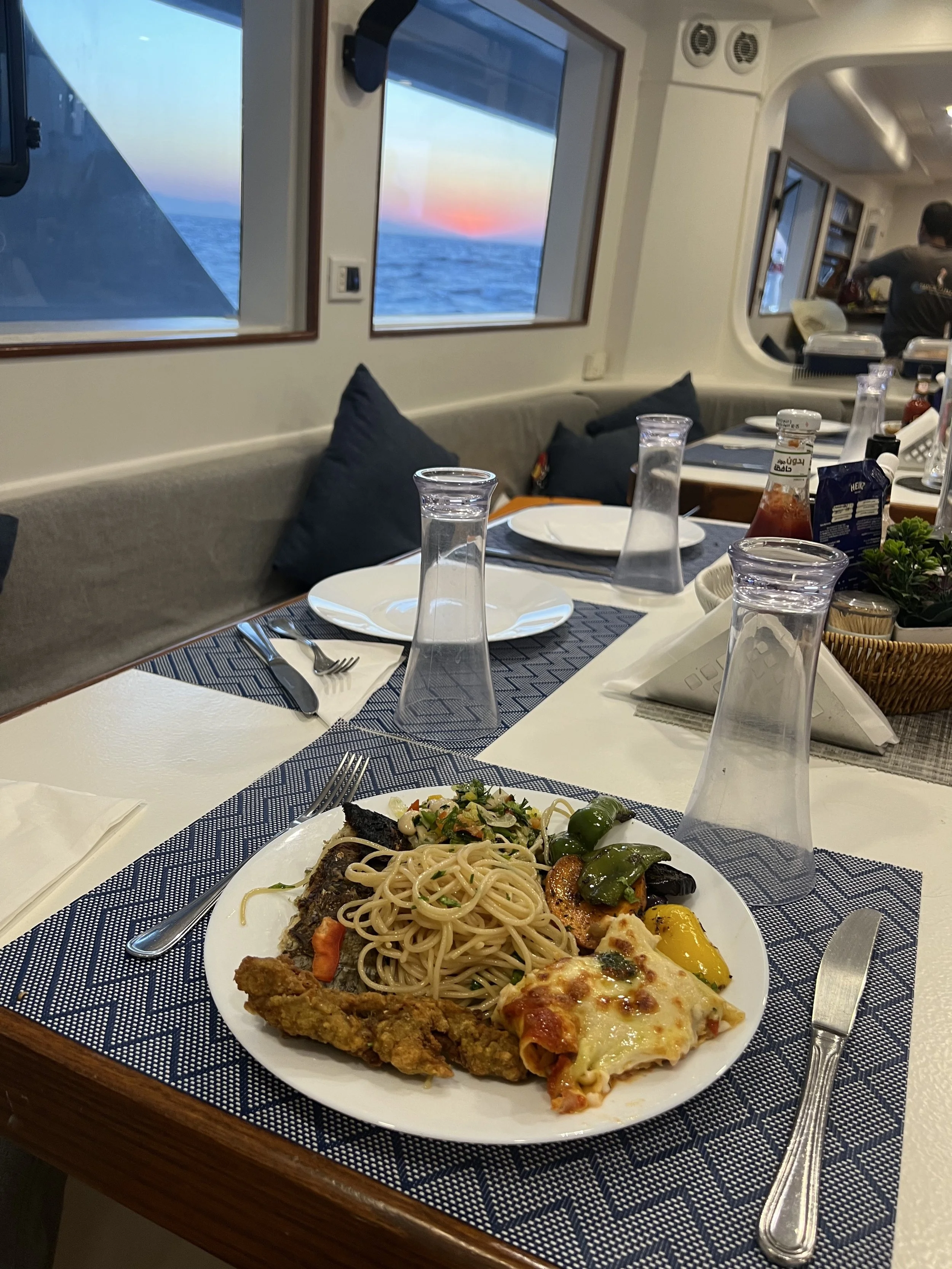
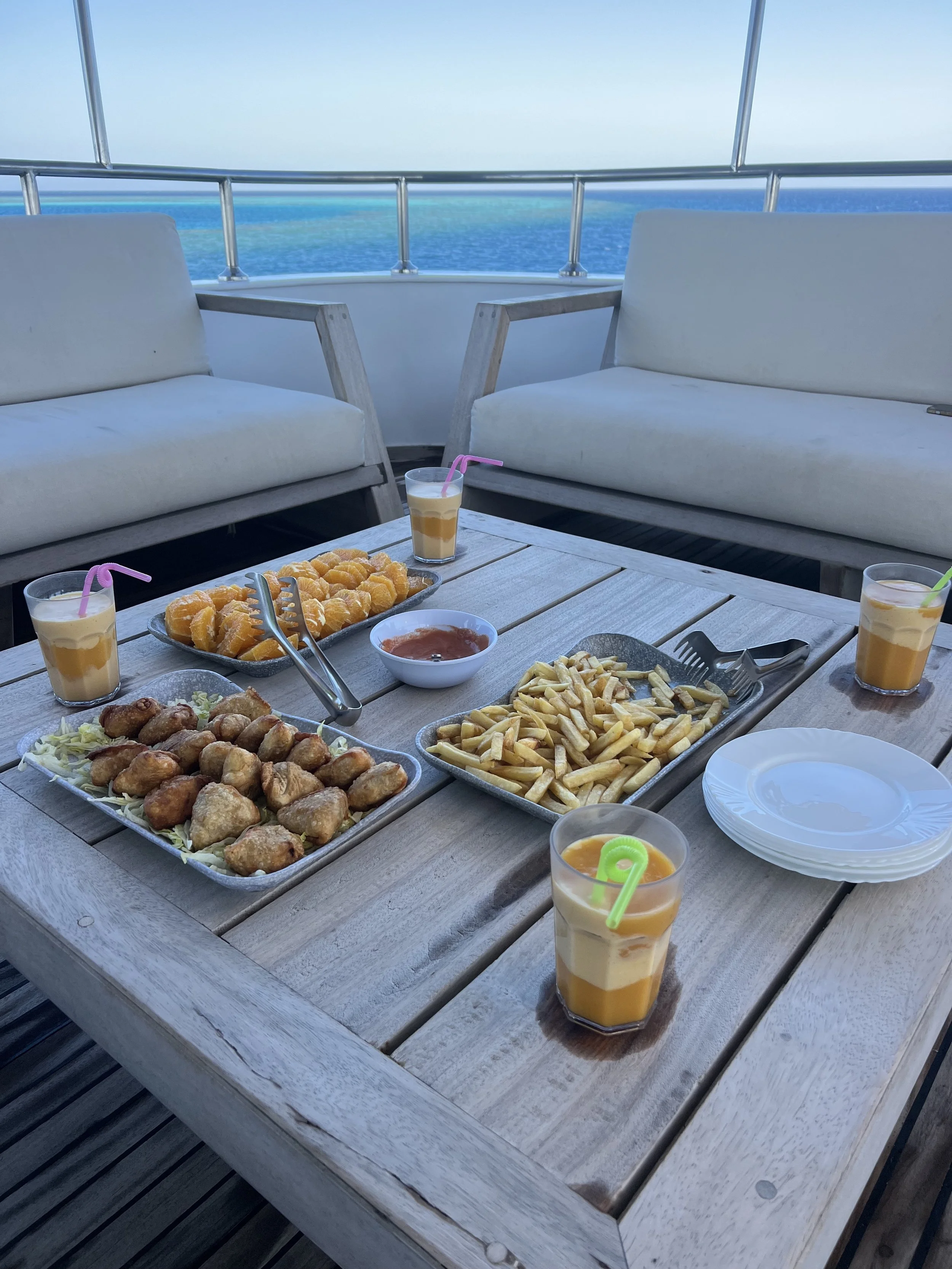
Amenities: Of course the resort wins here. A live aboard will have less space and options for entertainment, while the resort will have multiple food options and more things to do outside of diving! That being said, I thought the food on my live aboard was spectacular, and I was never hungry.
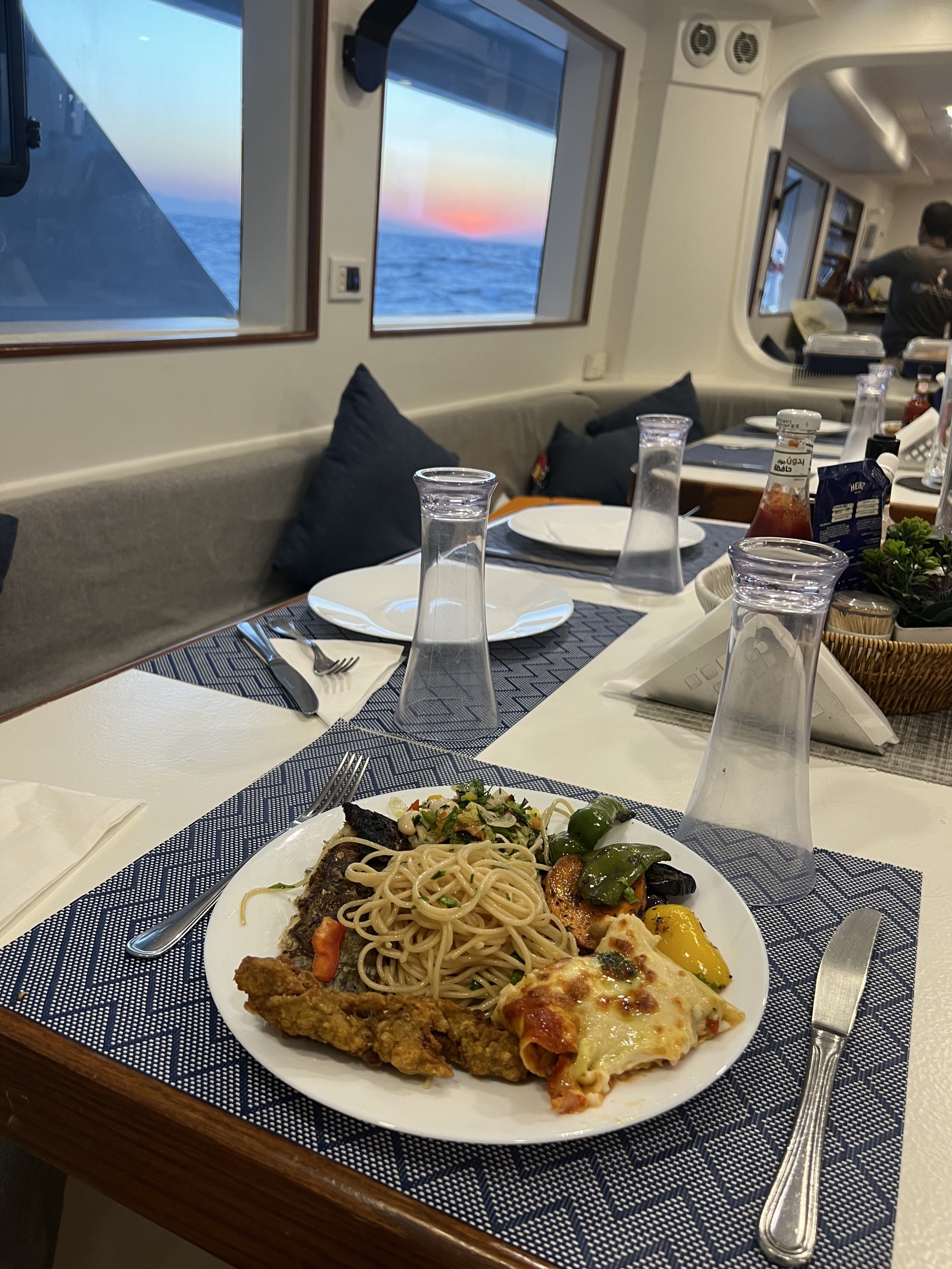
The food was to die for!
Travel time: Since the live aboard stays out in the water, you’ll have less travel time on the live aboard to dive sites while the day trip will need to go back and forth. Therefore, your days may feel longer if you resort dive.
Non-dive related activities: It goes without saying that the live aboard is 100% focused on diving. If you’re not interested in doing 3-4 dives a day, then a resort is better for enjoying other activities.
In summary: If you’re here for the diving - do a liveaboard. If you’re here for other activities, including relaxation or traveling with family / friends that have mixed interests, then stick with the resort.
Typical 1-Week Liveaboard Itinerary (Example)
When I dove in Egypt in June 2025, I did a northern route that went from Hurghada to Brothers Island, up to Sharm El-Sheikh, through Ras Mohammed Nature Preserve, Thistlegorm, and back to Hurghada.
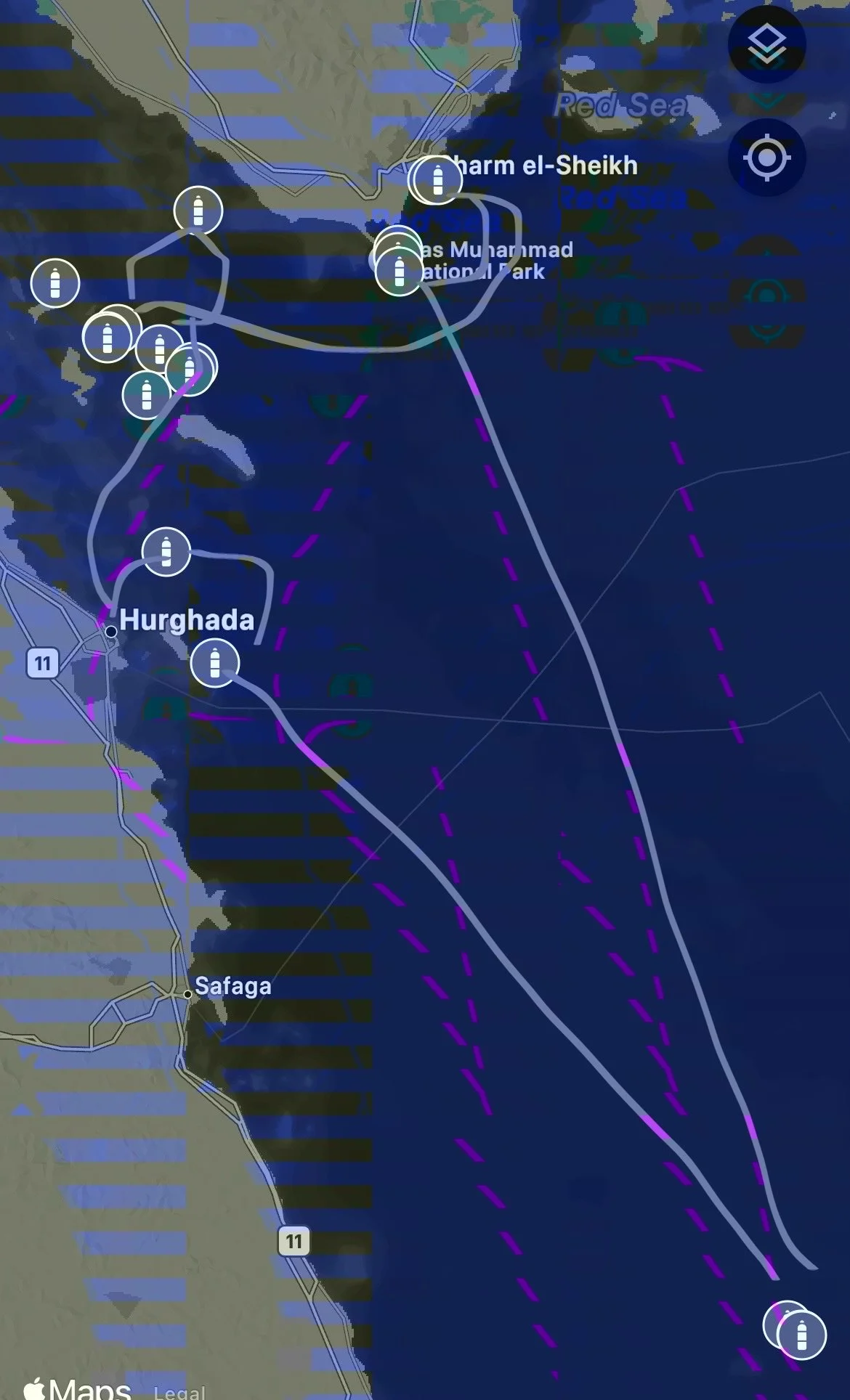
My live aboard dive route - with 19 dives
The daily dive structure was:
5:30AM: Wake-up, snack, and dive briefing
6AM: Dive 1
7:30AM: Breakfast
9AM: Dive 2
12PM: Lunch
1:30PM: Dive 3
4PM: Snack & tea
6PM: Night dive
7:30PM: Dinner
9PM: Everyone is in bed and sleeping for round 2
The boat would typically move locations overnight (so you’re in a new spot by morning) and / or between Dive 2 and 3. Of course the dive sites and route is weather dependent and is determined by the captain. We had to change our itinerary a few times based on high winds, but the team did an amazing job and made sure we had the best experience possible.
Best Dive Sites on the northern red sea route
Thistlegorm
Likely the most famous wreck in all of the Red Sea, Thistlegorm is an old WW2 English tanker that was sunk in 1941. The super cool thing about this wreck is it is a museum with artifacts like ammunition, motorcycles, and old vehicles. It’s a really cool sight to see and really big. You’ll likely find lots of dive boats here as it’s extremely famous.
Ras Muhammad
This nature preserve is on the southern tip of the Sinai Peninsula, and is home to some of the most spectacular reefs in Egypt. You’ll find 20ft+ diameter sea fans, fish, and really fun drift dive sites.
Brothers Island
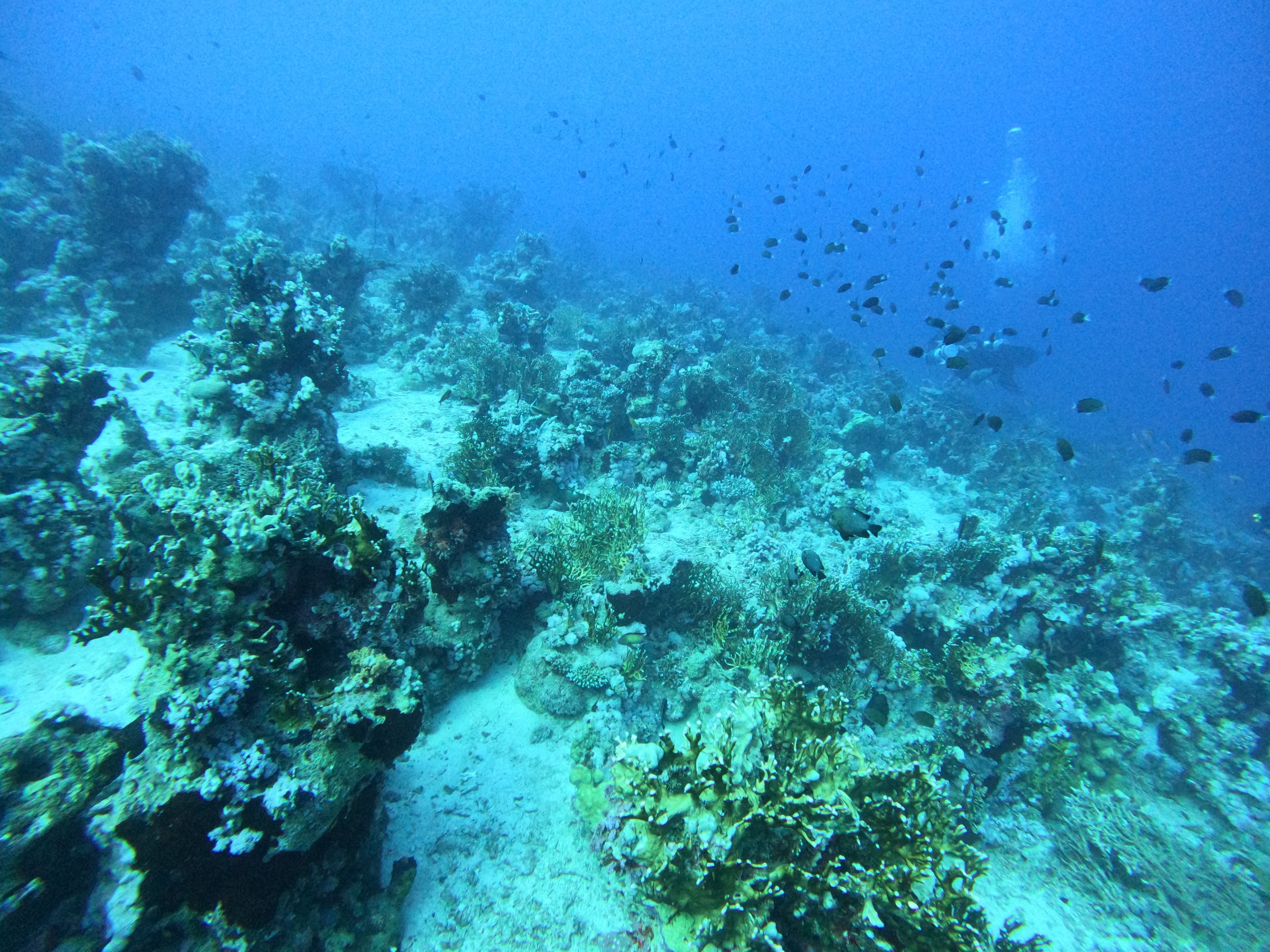
Another famous Red Sea location, the Brothers Islands are a famous dive spot that Red Sea live aboards visit on both the Northern and Central routes. Located south of Hurghada and north of Port Ghalib, this island is famous for sharks (pelagic / hammerhead / grey reef / whitetip / thresher) in the summer. Another big reason to do a live aboard, as day trips do not make it out here!
Ulysses Wreck
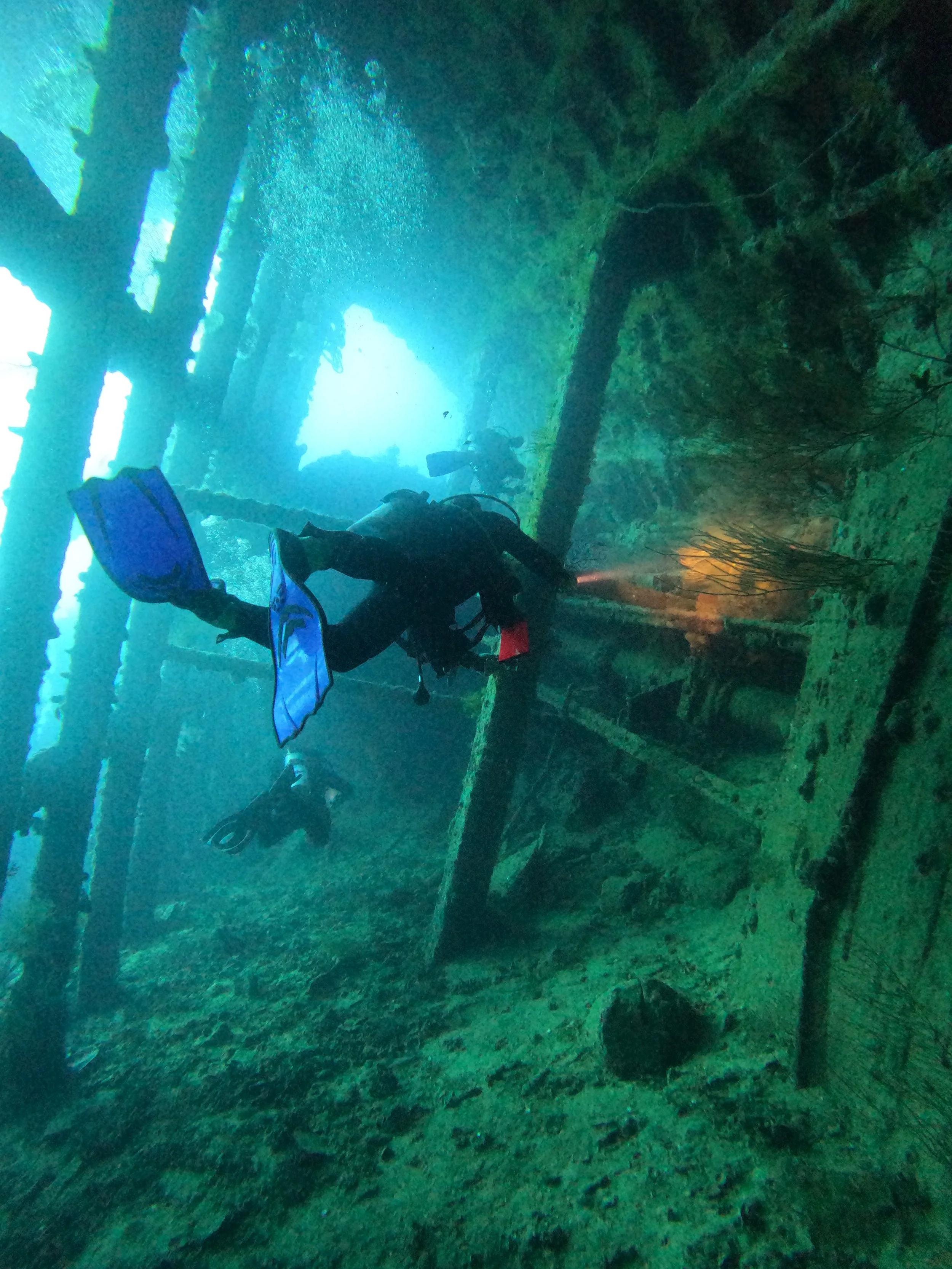
A smaller and less traveled wreck near the island of Gobal Seghir, this wreck sunk in 1887 and has a ton of soft corals and marine life, including glassfish, flutefish, lionfish, scorpion & stone fish, moray eels, puffer fish, box fish, nudibranchs, and stingrays. It’s a great spot to dive if you’re in the northern Red Sea.
Where to Stay Before and After Your Dive Trip
Hurghada is a “beach” town, but there are better places to stay! Any hotel with private beach access will be nicer and more accessible than places without. Some beaches require you to pay an entrance fee (although it’s only a few dollars!)
The best area to stay in is closer to the airport (see the red circle below). This has the best nightlife and restaurants, and is more walkable than other areas of Hurghada. The northern part of the city is less lively and takes longer to get to.
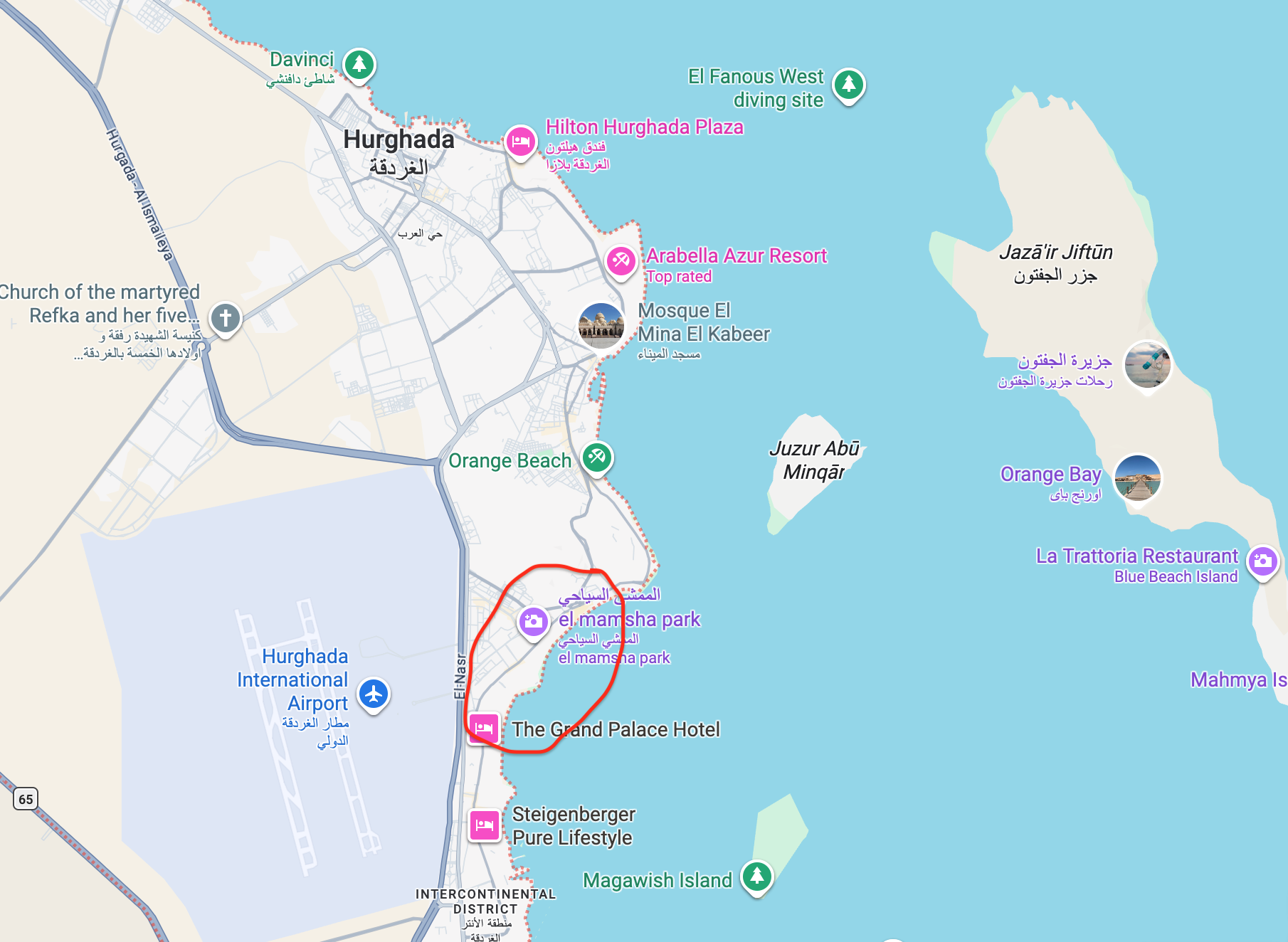
If you’re taking a dive boat, you’ll either leave from the Hurghada Marina (just north of Orange Beach) or a Marina outside the city (i.e. El Gouna, which is where my dive boat left from), and the dive company will likely organize transport. Therefore, hotel location is not a priority.
Hotels I would recommend include:
$$$ (~$200/night)- these 5 star hotels are on the water, with 4 restaurants, adult-only beach clubs… the true luxury experience
$$ ($100-$200/night)
$ (~$30/night)
You can get around by calling a taxi or using Uber (I used Uber the whole time!).
Costs & Budget Breakdown
Flights: $340 ($170 each way from London, departure to Rome)
Hotel 2 nights before and 1 night after the boat trip ($100, $33/night)
Liveaboard cost: $1100 for 7 days (included park fees) — Note that I got a pretty good deal on this dive boat. They can be much more expensive (or less) depending on what you’re looking for!
Rental gear: $210
Port fees: $220
Gratuities: $100
Nitrox: $0 (included, yay!)
Total cost: $2,070
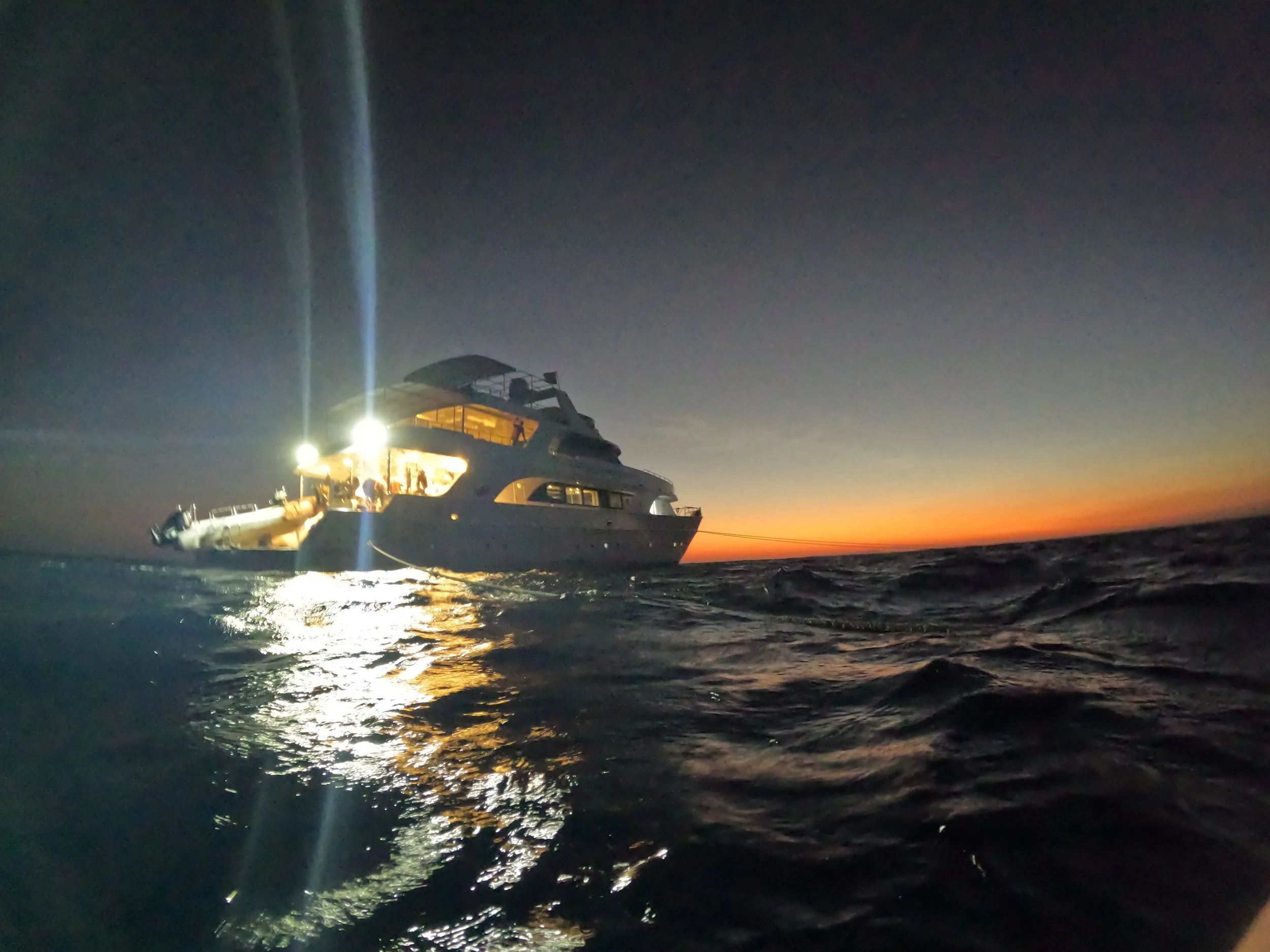
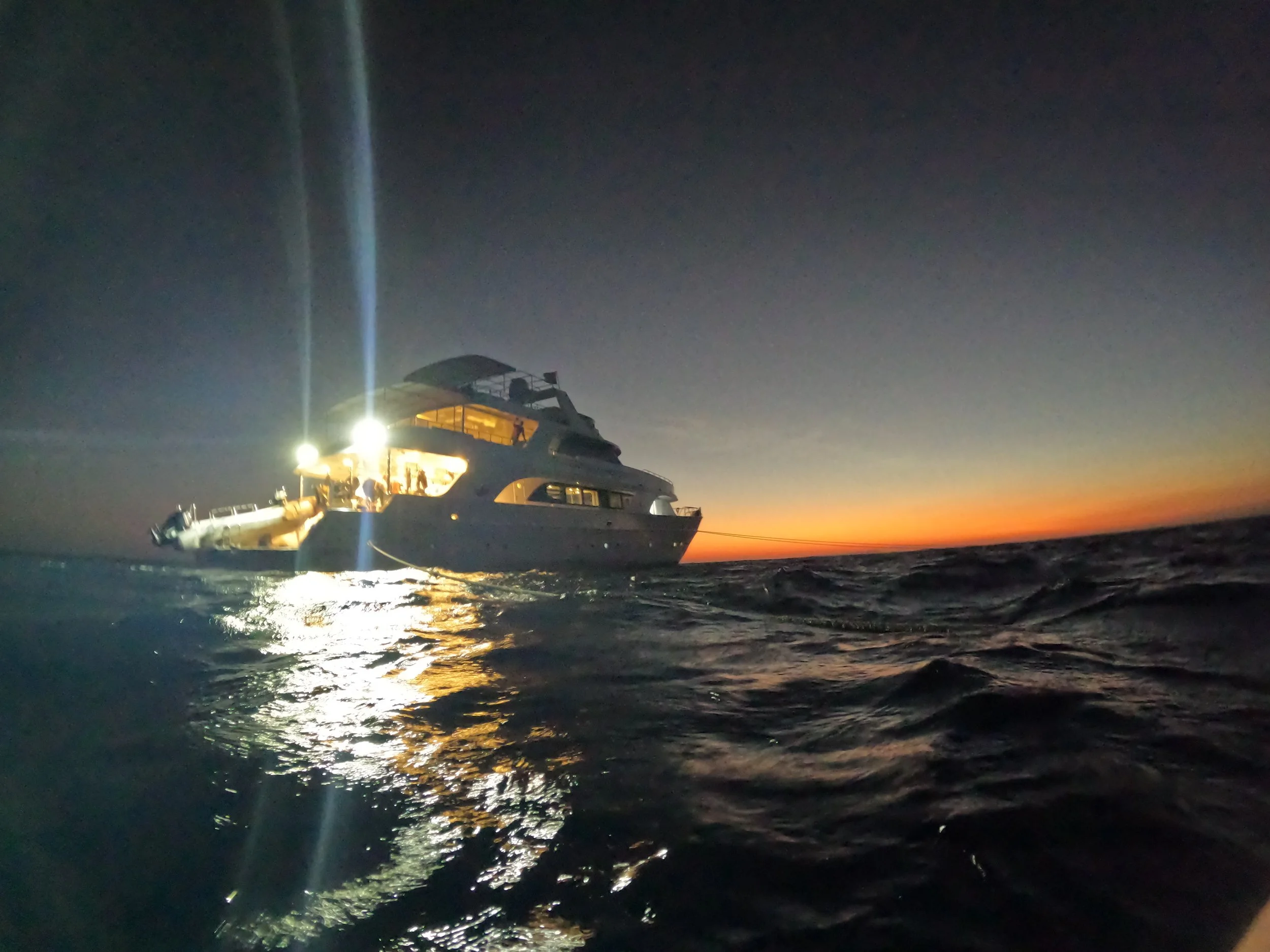
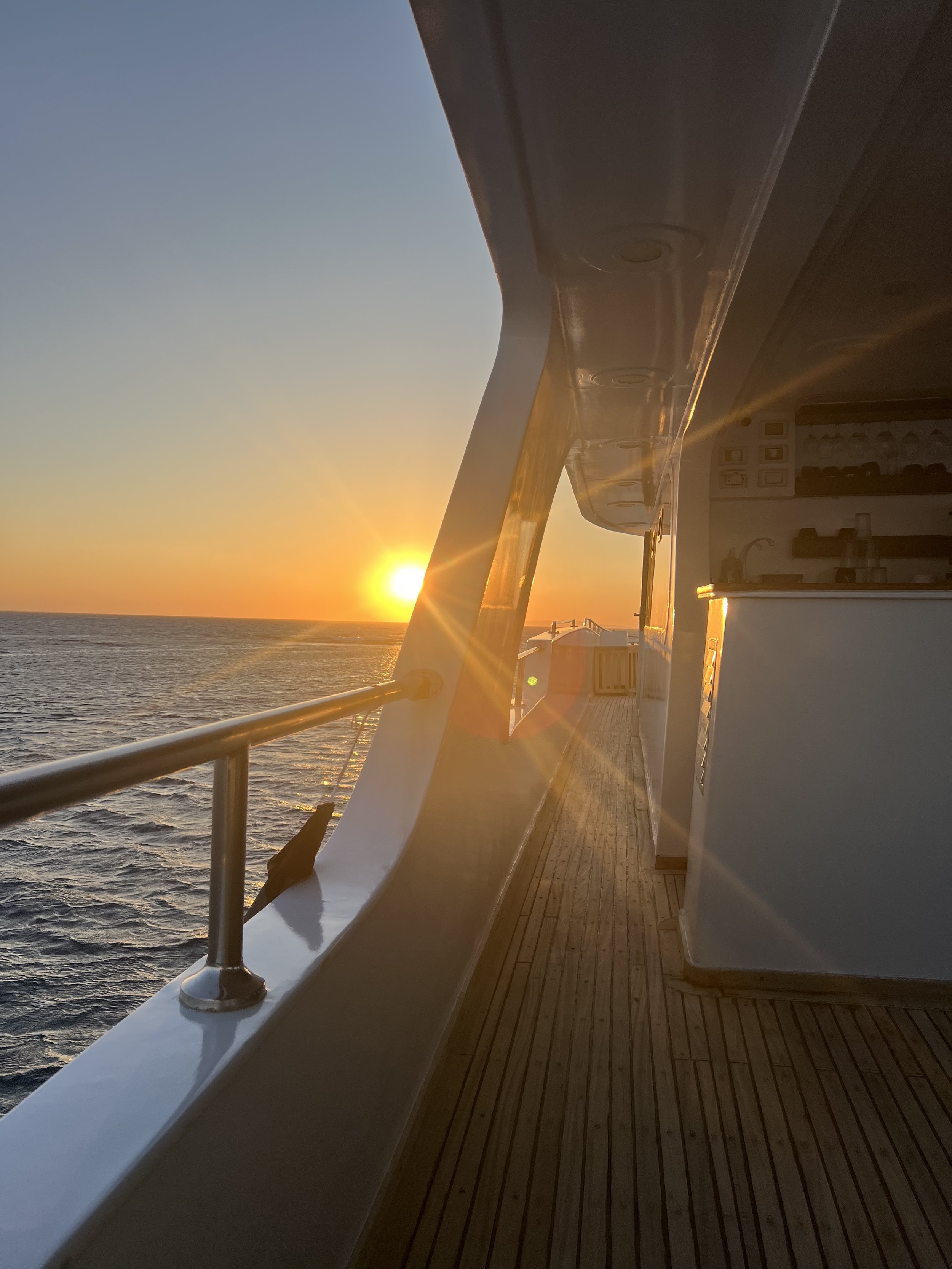
View from the boat after a night dive
Safety, Certification & Equipment Considerations
As with any scuba diving trip, you at least need to be open water certified (typically through PADI or SSI). For going to the Red Sea, I highly recommend both advanced certification (which allows you to go down to 30m) and Nitrox certification (which will be absolutely worth it for 4x dives per day on the liveaboard). Many liveaboards have instructors on board that can do a Nitrox certification for you, but not certifications like advanced or deep.
I am deep certified and was happy to be, because many of the dives I did went down to ~35m. In general, the limiting factor for deep dives was typically the Nitrox (for example, 33% oxygen forces your maximum depth to be 32m). I used Nitrox the whole time while diving in Egypt as it was included in my liveaboard cost. Make sure you check when you’re booking what the extra cost is and if it is available if this is important to you. In general, I think Nitrox helps recovery after diving and makes you less groggy.
Most live aboards will require you to have dive insurance. I use Diver Alert Network (DAN) plan, which has “Master” ($125k coverage lifetime dive accident coverage), “Preferred” ($250k per incident coverage), and “Guardian” ($500k per incident) plan options. I think the “Preferred” is the way to go for the extra services, including non-dive accidents and extra incident coverage in case of emergency.
As a note - I did use DAN this year! I had an ear issue and went to a local doctor. DAN paid me back fully (it was ~$50).
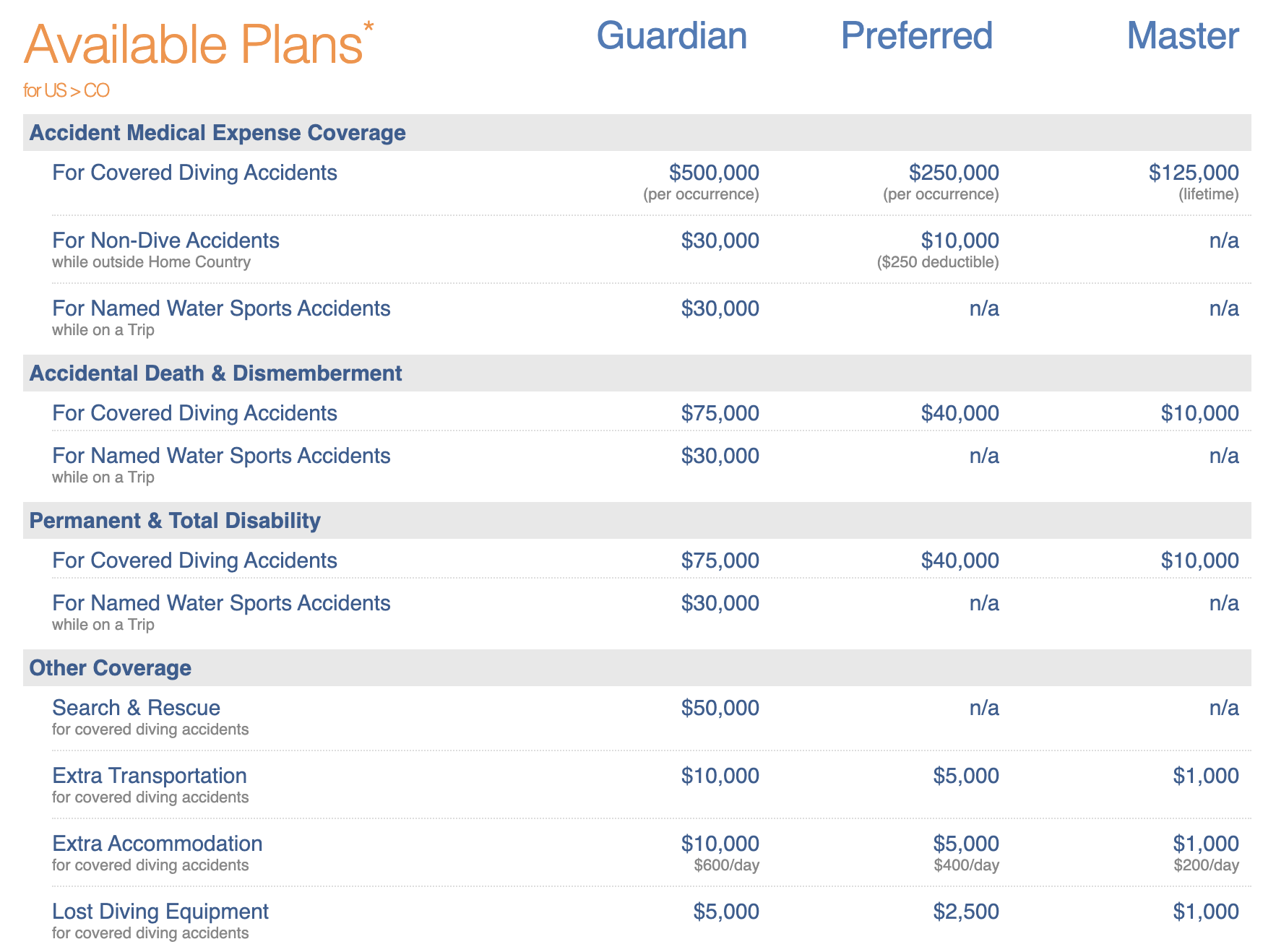
Available plans (for United States / Colorado selected) from DAN’s website
From an equipment standpoint, many people who travel to Egypt are experienced scuba divers and own their own equipment. I rented equipment from the live aboard and it all worked perfectly. If you are going to bring any of your own equipment, I would recommend:
SMB (surface marker buoy) and reel - this is 100% a MUST to have in Egypt. Note that I had this in my carry-on leaving Hurghada, and security confiscated my reel because I could “strangle” someone with it… so make sure to check it onto the flight.
Dive computer - 100% a MUST to have your own computer. You should be extremely comfortable with how it operates, especially with 4x dives a day. Surface intervals of 2-3 hours plus Nitrox should make your bottom time not an issue with any watch. I have a Cressi and their internal calculator is extremely cautious (meaning if I have a 1 hour surface interval, it limits my bottom time significantly less than other watches like Mares / Shearwater), but I had no issue in Egypt.
Dive light - also a MUST but all dive boats will have extras. There are night dives and wrecks to explore, and it’s important to have a light in your BCD at all times just in case
Mask - these are small to travel with, and they’re really nice to have if you have issues with mask fit and leakage. I bring my own mask with me all the time
Non-Diving & Local Tours from Hurghada
There are many day tours from Hurghada! Ranging from island tours, to ATV rides, to visiting famous historical sites like Luxor or even Cairo, the options are endless! I recommend the following tours:
Hurghada: Quad Bike, Camel, Show, Dinner, & Stargazing Trip (from $15)
If you’re looking for some desert fun - this is the adventure for you! Camel / ATV rides, plus dinner and stargazing.
Orange Bay Island Boat Trip ($35) or Ozirea Island ($35)
Ozirea Island (where Orange Bay is located) is the closest island to Hurghada and a great snorkeling spot! There are bars and restaurants in the area to enjoy.
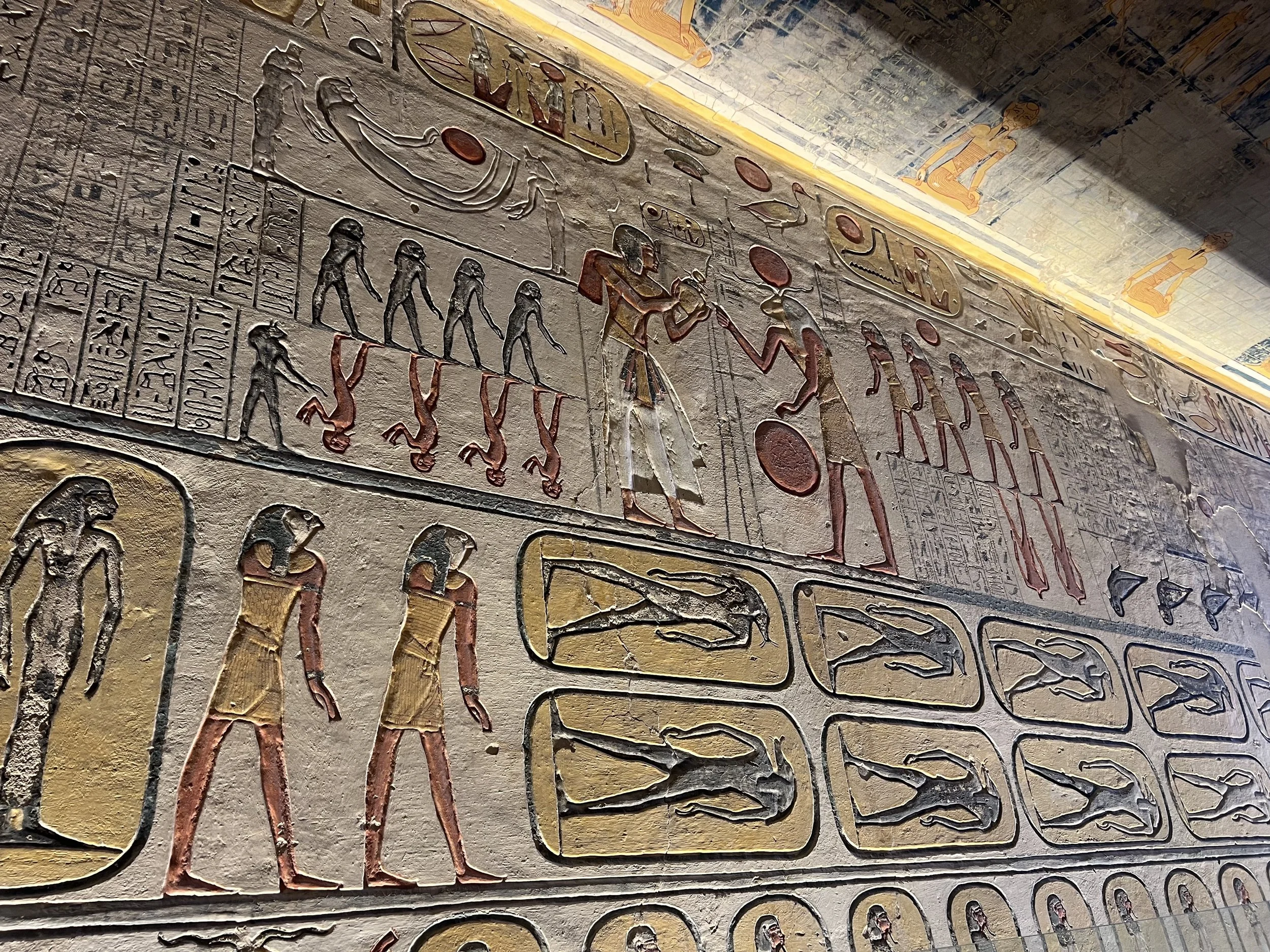
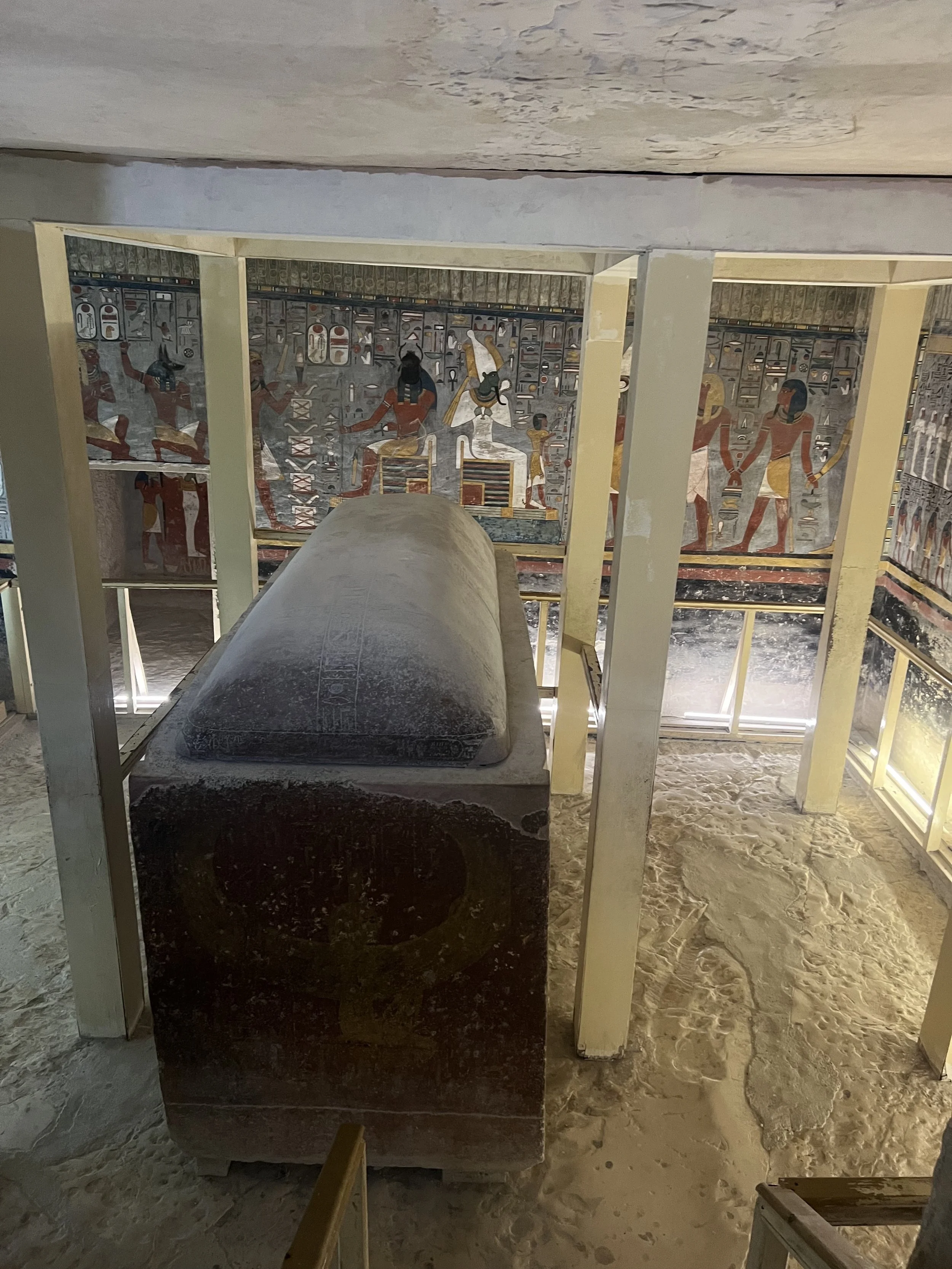
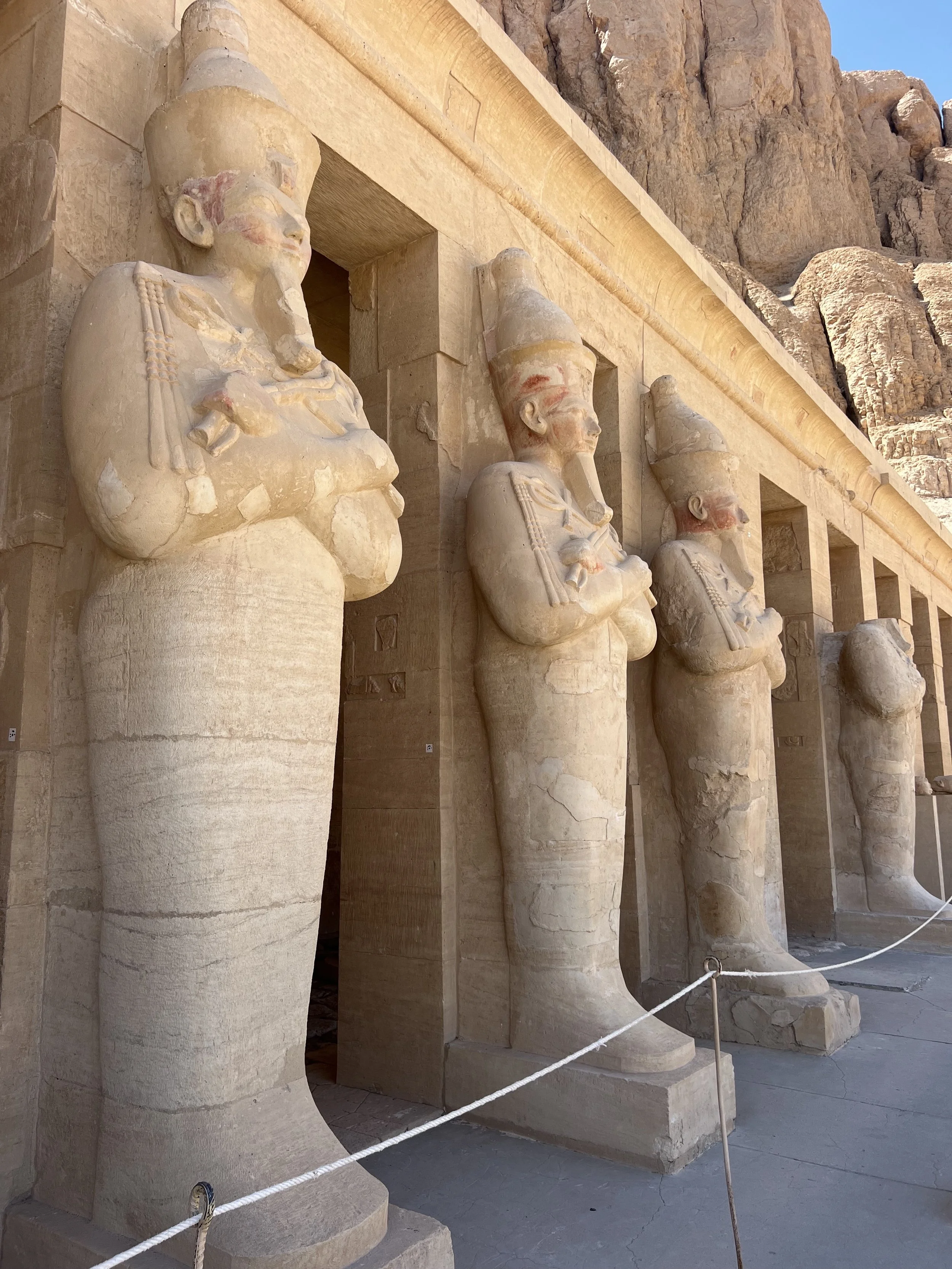
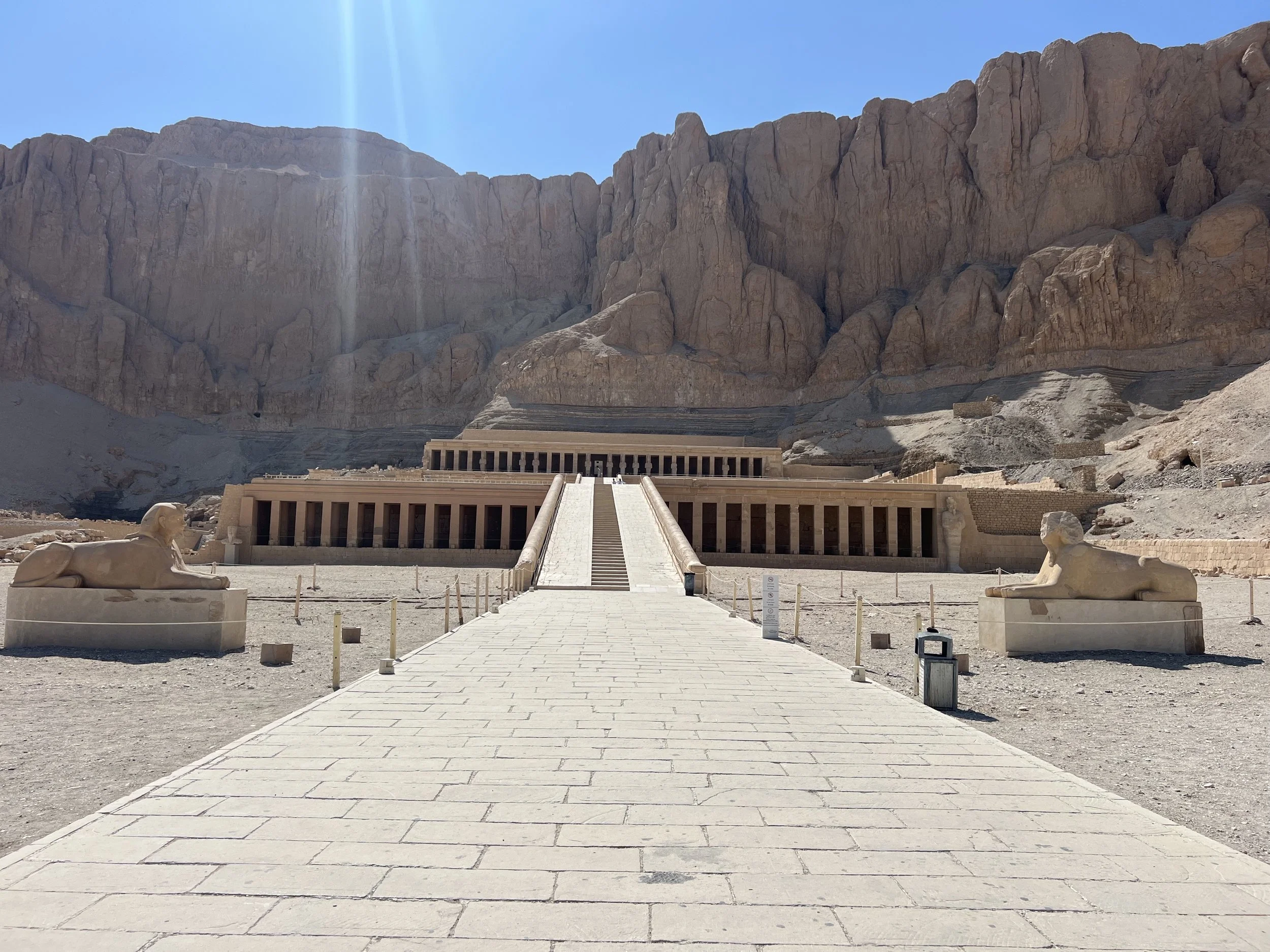
Luxor Tour with Valley of Kings, Karnak & Tut Tomb ($90)
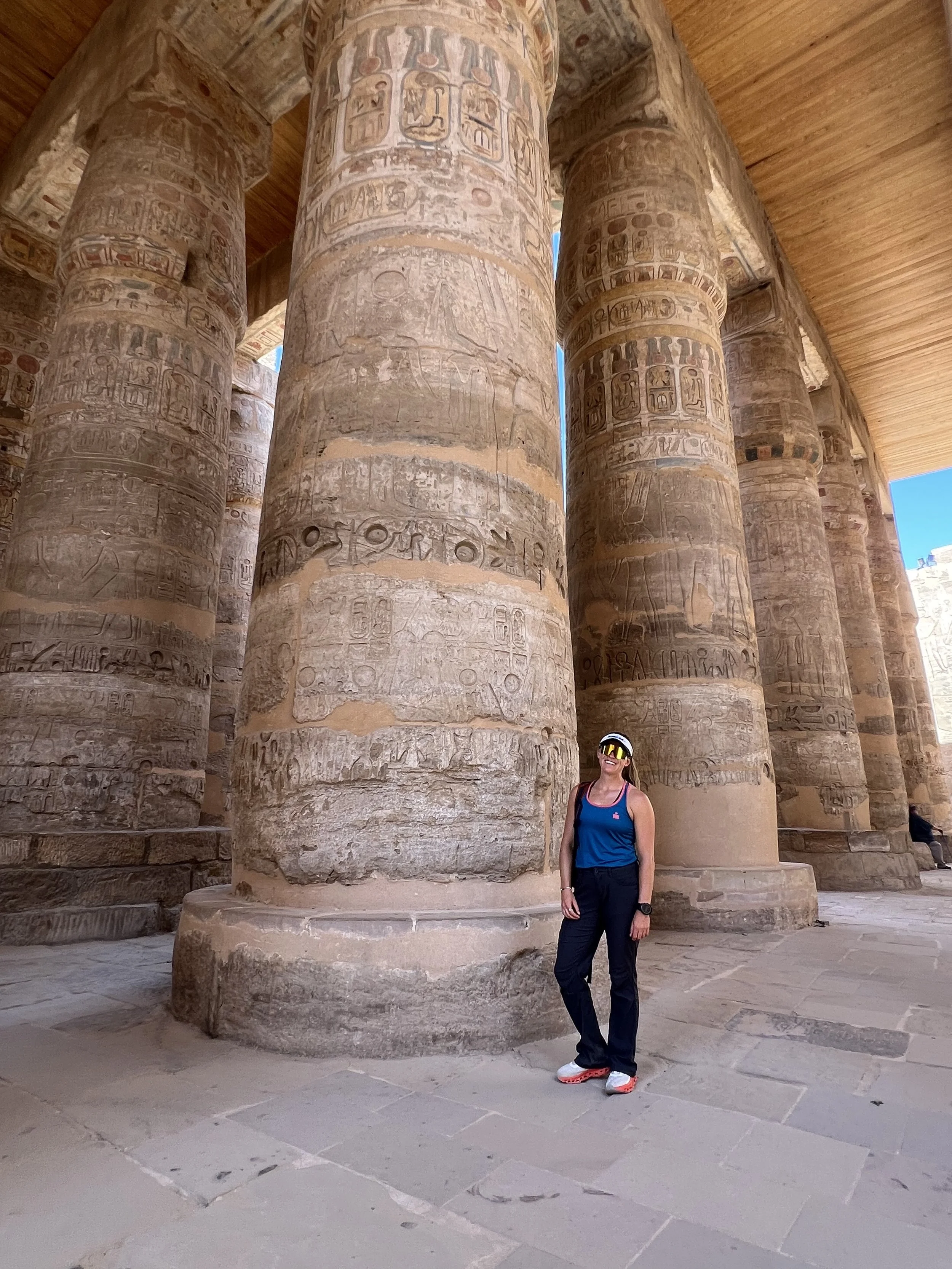
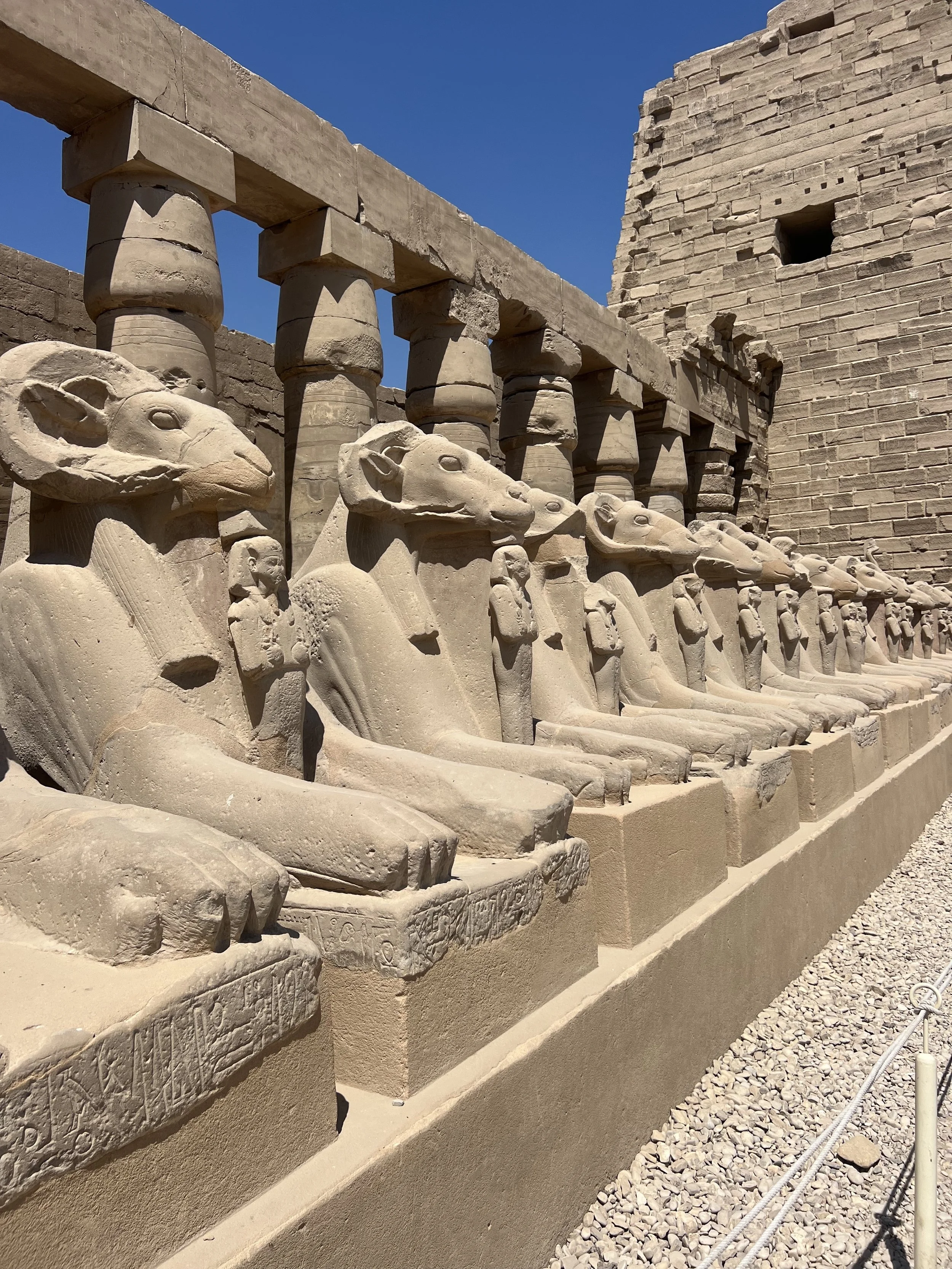
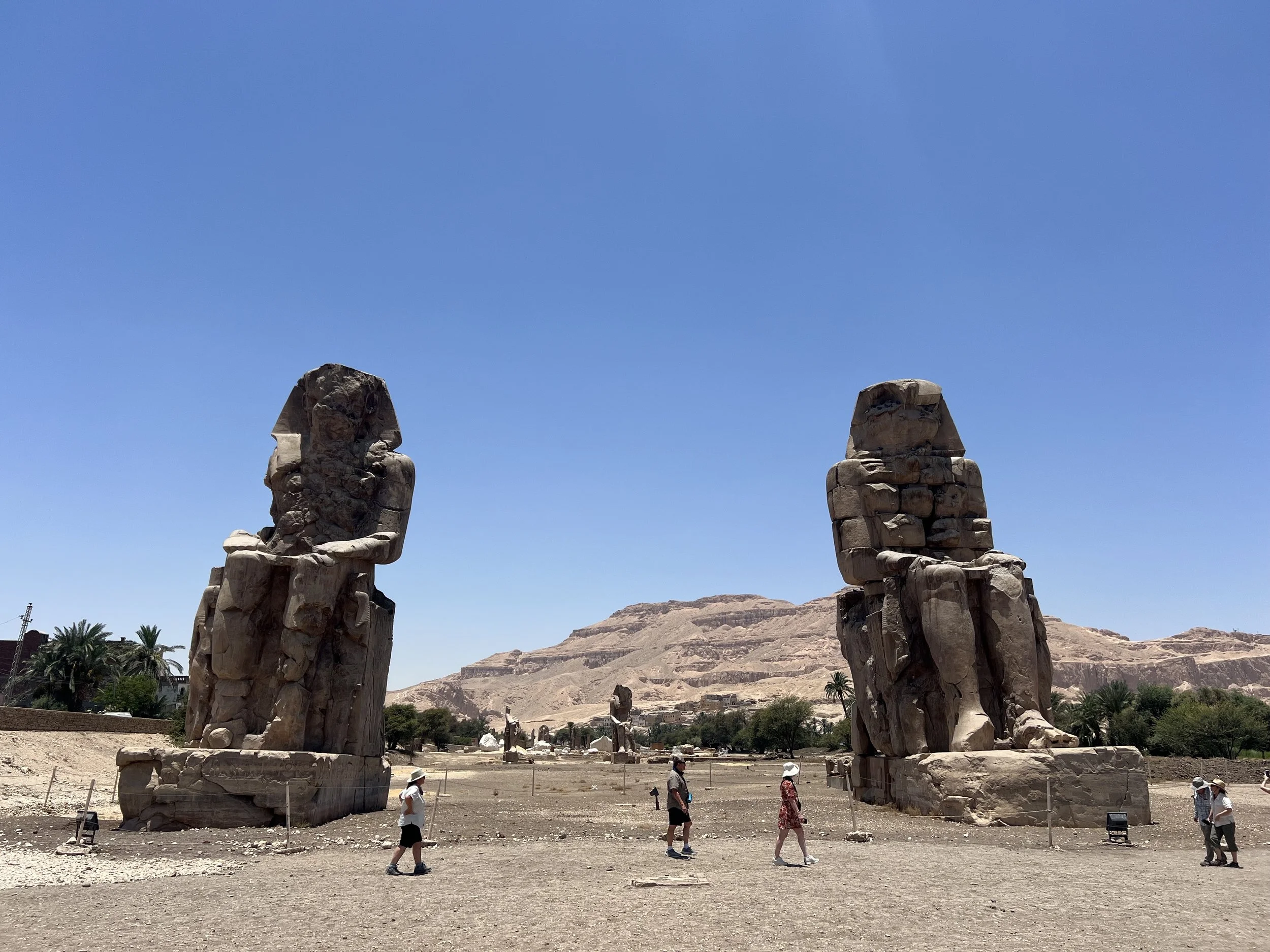
Yes, you can take a day trip from Hurghada to Luxor! I did this when I visited Egypt and it was worth it. You will visit some of the top famous spots in Luxor. I will say that it was a really really long day… I was picked up at 3:30am from my hotel and dropped off around 9:30pm. It was worth it, but the 5.5 hour bus ride each way was tough. The bus did have air conditioning, but it wasn’t especially comfortable to sleep in. I do recommend making the trip if you don’t have an option to stay the night.
Cairo and Giza Highlights (from $75+)
Yes, you can also take a day trip to Cairo and Giza! The trip linked above uses a bus (again, a long drive). There are more expensive trips ($300+) where you can jump on a plane for a one-day adventure. Again, I would recommend this only if you don’t have the option of staying the night in Cairo.
Is a Week of Diving in Hurghada Worth It?
If I haven’t convinced you now, I’m not sure what else I can do! Yes, it’s absolutely worth it. The food, people, culture, wildlife, reefs, and wrecks are spectacular.
If you’re looking for more dive adventures, check out my blogs below on Indonesia!